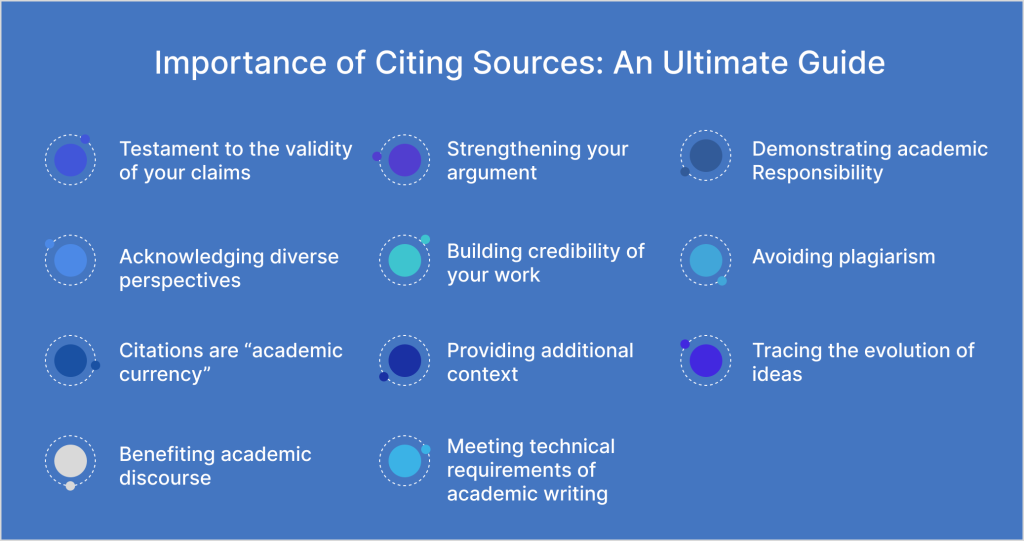
Academic writing involves more than presenting your own ideas. Students also need to acknowledge the books, journal articles, websites, reports, and other sources that help them develop their arguments. Correct citation gives credit to original authors, allows readers to verify information, and demonstrates that an assignment is based on responsible research.
However, learning how to cite sources in academic writing can be confusing, especially when different universities and subjects require different citation styles. Students may be unsure when to include an in-text citation, how to paraphrase research, or how to format a reference list.
The good news is that citation becomes easier when you understand its basic principles. This guide explains when citations are needed, how to use common citation styles, how to format references, and how to avoid mistakes that can weaken your academic work.
What Is Citation in Academic Writing?
Citation is the process of acknowledging the sources of information, ideas, evidence, or words used in an academic paper. It helps readers identify where the information originated and locate the original material if they want to explore it further.
Most academic citation systems have two main components:
- In-text citations or footnotes: These identify a source at the point where you use its information or ideas.
- A reference list, Works Cited page, or bibliography: This provides the details readers need to identify and locate the sources.
The exact format depends on the citation style required for your assignment.
For example, an author-date system may identify a source using the author’s surname and publication year. A notes-based system may use a footnote or endnote containing publication details.
Regardless of the format, the purpose remains the same: to acknowledge sources accurately and make your research traceable.
Why Is Correct Citation Important?
Correct citation is an essential part of academic integrity. It shows that you recognize the difference between your own contribution and information obtained from other people.
1. It Helps You Avoid Plagiarism
Plagiarism occurs when someone presents another person’s words, ideas, or work as their own without appropriate acknowledgment. It can happen intentionally or through misunderstanding citation rules.
Using quotation marks and citations for direct quotations, and citing sources when paraphrasing or summarizing, helps you acknowledge the original work.
However, citation alone does not make copied writing acceptable in every situation. Direct quotations should be clearly marked, and paraphrasing should genuinely express the idea in your own words.
2. It Strengthens Your Arguments
Reliable sources can support your explanations, provide evidence for claims, and help you compare different perspectives.
For example, if you argue that a particular teaching strategy improves student learning, citing relevant research allows readers to examine the evidence behind your claim.
The quality and relevance of your sources matter as much as the presence of citations.
3. It Helps Readers Verify Information
A citation gives readers a way to trace a claim to its original source. This is particularly important in research papers, where readers may want to check a statistic, examine a study’s methods, or investigate a different interpretation.
Complete and accurate references make this process easier.
4. It Demonstrates Academic Responsibility
Following the required citation style shows that you understand the conventions of academic research. It also helps distinguish established evidence from your own analysis and conclusions.
When Should You Cite a Source?
One of the most important citation skills is knowing when acknowledgment is necessary.
You should generally cite a source when you use the following:
Direct quotations. If you reproduce someone else’s exact words, use quotation marks or the appropriate block-quotation format and provide the required citation.
Paraphrased ideas. If you explain another author’s idea in your own words, you still need to cite the source.
Summaries of research. If you condense the findings or arguments of a book, article, or report, acknowledge the original work.
Statistics and specific facts. Cite the source of figures, research results, specialized information, and claims that readers may need to verify.
Tables, figures, images, and other borrowed material. Follow the relevant style and licensing requirements for attribution and reuse.
Distinctive theories or interpretations. When discussing a particular scholar’s argument or framework, cite the work where it was presented.
Common knowledge generally does not require a citation. For example, a basic fact widely known within the intended audience may not need a source. However, what counts as common knowledge depends on the subject, audience, and context. When a claim is specific, disputed, or important to your argument, providing a reliable citation is usually the safer choice.
Understanding the Main Academic Citation Styles
Different disciplines use different systems for documenting sources. Always check your instructor’s instructions before choosing a format.
APA Style
The American Psychological Association (APA) style is widely used in psychology, education, and other social and behavioral sciences.
APA uses an author-date system. In-text citations typically include the author’s surname and the year of publication. Direct quotations also require a page number or another suitable location indicator when available.
Example of a paraphrase:
Regular feedback can help students identify areas for improvement (Smith, 2023).
Example of a direct quotation:
Smith (2023) stated that “specific feedback supports learning” (p. 42).
These are illustrative examples, not quotations or claims attributed to a verified publication.
At the end of the paper, include a References list containing the full details of cited sources.
APA details vary according to the source type, number of authors, and other circumstances. Consult the official style guidance or your institution’s recommended guide for the precise format. <Cite refs={[“turn596526search0″,”turn596526search3”]}/>
MLA Style
Modern Language Association (MLA) style is commonly used in literature, language studies, and other humanities disciplines.
MLA generally uses the author’s surname and a page number for in-text citations when the source has page numbers.
For example:
Critical reading involves questioning the evidence behind an argument (Smith 42).
The corresponding entry appears on the Works Cited page.
The exact entry depends on whether you are citing a book, journal article, website, or another source. Do not automatically add a publication year to every MLA in-text citation; follow the rules for the particular source and citation style.
Chicago Style
Chicago style offers two major documentation systems:
- Notes and bibliography: Uses footnotes or endnotes, usually alongside a bibliography. It is common in history and some humanities disciplines.
- Author-date: Uses parenthetical author-date citations and a reference list, often in social sciences and related fields.
A notes-and-bibliography paper might place a superscript note number after a sentence and provide the source details in a footnote.
An author-date paper might cite a source in the text using a format such as (Smith 2023, 42).
Because these systems work differently, confirm which Chicago system your instructor expects. <Cite refs={[“turn596526search2″,”turn596526search6”]}/>
Quick Comparison of Citation Styles
| Feature | APA | MLA | Chicago |
|---|---|---|---|
| Common use | Psychology, education, social sciences | Literature and humanities | History and multiple disciplines |
| Typical in-text method | Author and year | Author and page | Notes or author-date |
| End section | References | Works Cited | Bibliography or reference list, depending on system |
| Page numbers | Required for direct quotations; other uses depend on context | Used for relevant paginated sources | Used where appropriate to the system and source |
These are general patterns, not rules for every assignment. Use the specific edition and instructions required by your institution.
How to Cite Sources Correctly Step by Step
Once you know the required style, follow a consistent process throughout your assignment.
Step 1: Identify the Original Source
Before citing information, determine where it came from.
If a webpage discusses a research study, try to locate the original study rather than citing the webpage as if it were the study itself. If you only have access to a secondary source, follow your citation style’s rules for secondary citations instead of implying that you read the original.
Record the source’s author, title, publication date, publisher or journal, and relevant page numbers or identifiers.
For online sources, save the DOI or URL when appropriate. A DOI is a persistent identifier commonly used for scholarly publications.
Step 2: Record Source Details While Researching
Do not wait until the end of your assignment to collect citation information.
Keep a record of each source as soon as you decide to use it. For a journal article, useful details may include:
- Author names
- Publication year
- Article title
- Journal title
- Volume and issue numbers
- Page range or article number
- DOI, if available
For a book, record the author, title, edition if relevant, publication year, and other details required by your chosen style.
For a webpage, record the author or organization, page title, date if available, website name where required, and URL.
The required elements differ between styles and source types, so check the appropriate guide rather than assuming every source follows the same template.
Step 3: Add In-Text Citations as You Write
Place citations close to the information they support.
For example, imagine that you are writing about study habits and have consulted a hypothetical source by Taylor published in 2024.
An APA-style paraphrase could look like this:
Students may benefit from reviewing material across multiple study sessions (Taylor, 2024).
A narrative citation could look like this:
Taylor (2024) examined how students reviewed course material.
These examples illustrate the format only. Use real, verified sources in your actual assignment.
Adding citations while drafting helps you avoid losing track of where a claim came from and reduces the risk of accidentally presenting another person’s idea as your own.
Step 4: Paraphrase and Summarize Responsibly
Paraphrasing means expressing a source’s idea in your own words and sentence structure. Summarizing means presenting the main points of a larger source more briefly.
Changing only a few words while retaining the original sentence structure is not strong paraphrasing.
To paraphrase effectively:
- Read the passage until you understand its meaning.
- Look away from the original text.
- Explain the idea using your own vocabulary and sentence structure.
- Compare your version with the source to check accuracy.
- Add the appropriate citation.
Do not change the author’s meaning to make the evidence fit your argument. If a passage contains a precise definition or wording that is important to your analysis, a properly cited quotation may be more appropriate.
Step 5: Use Direct Quotations Selectively
Direct quotations can be useful when the exact wording matters, such as when analyzing a definition, interpreting a passage of literature, or discussing a particular statement.
However, too many quotations can make an assignment feel like a collection of other people’s words rather than your own argument.
When quoting, reproduce the wording accurately and follow your citation style’s rules for quotation marks, block quotations, and location information. Introduce the quotation where appropriate and explain how it supports your point.
Step 6: Build the Reference List
Once your writing is complete, prepare the final reference section in the format required by your style.
Check that each entry contains the necessary information and follows the correct order, punctuation, capitalization, and formatting.
In many author-date systems, sources cited in the text should correspond to entries in the reference list. Notes-based systems may have different conventions, so verify the rules for your chosen style.
Step 7: Cross-Check Every Citation
Before submitting your assignment, compare the citations in the text with the final source list.
Ask yourself:
- Have I cited every borrowed idea, quotation, statistic, and specific claim that needs acknowledgment?
- Does every in-text citation lead to the correct source details?
- Have I included all required information for each source?
- Are quotations accurate and clearly marked?
- Have I followed the correct citation style consistently?
- Are my URLs and DOIs accurate where required?
A final check can catch missing authors, incorrect dates, incomplete entries, and inconsistent formatting.
How to Cite Different Types of Sources
Not all sources are documented in the same way. Here are some common examples of what to look for.
Books
For a book, citation details typically include the author, title, publication year, and publisher. Depending on the style and source, an edition or other information may also be needed.
If you quote from a specific page, provide the required page reference in the text or note.
Academic Journal Articles
Journal article references often require the authors, year, article title, journal title, volume, issue, page range or article number, and DOI where available.
Check the journal’s official record or the article itself to confirm the details.
Websites and Online Articles
For online sources, identify the author or organization, the page title, the date if available, and the website or URL information required by your citation style.
Do not assume that every webpage needs the same fields. If an author or date is missing, consult the rules for handling missing information in your selected style.
Reports and Institutional Publications
Reports published by universities, government departments, or organizations may list an institution as the author. Record the title, date, publisher or organization, and identifier or URL as required.
Check the report’s title page or official publication record rather than relying on an unrelated webpage that mentions it.
Images, Charts, and Tables
When using visual material created by someone else, provide the attribution required by the citation style and check whether you have permission or a suitable license to reuse it.
Citing an image does not automatically grant permission to reproduce it. Follow applicable copyright rules, license conditions, and assignment requirements.
Common Citation Mistakes to Avoid
Forgetting to Cite Paraphrased Ideas
A sentence does not become your original idea simply because you rewrote it. If the underlying idea comes from a source, cite it.
Mixing Citation Styles
Combining APA in-text citations with MLA reference formatting can create inconsistencies. Choose the required style and use it throughout the assignment.
Providing Incomplete References
Missing publication details, incorrect titles, or broken links make sources difficult to locate. Verify the information against the original publication whenever possible.
Overusing Direct Quotations
Quotations can support your argument, but they should not replace your analysis. Use them selectively and explain their relevance.
Citing Sources You Have Not Checked
Do not assume that a source supports a claim simply because another author mentions it. When possible, read the original source and confirm that it says what you believe it says.
Relying on Citation Generators Without Checking Them
Citation tools can save time, but they may import incorrect dates, capitalize titles incorrectly, omit information, or format a source under the wrong category.
Treat generated citations as drafts. Compare them with a reliable style guide and correct any errors before submitting your work.
How to Use Citation Tools Effectively
Citation management tools can help students collect references, organize research, and insert citations while writing.
Depending on the tool, you may be able to save PDFs, store bibliographic details, group sources by project, and switch between supported citation styles.
To use these tools responsibly:
- Import the source from a reliable record where possible.
- Check the author, title, date, and publication information.
- Select the citation style required by your instructor.
- Review both the in-text citation and the full reference.
- Recheck the final document after editing or changing styles.
You can also maintain a simple spreadsheet or document with source details if you prefer not to use specialized software.
The tool you choose matters less than the accuracy of the information you record and the consistency with which you apply the required style.
Final Thoughts
Learning how to cite sources correctly in academic writing is an essential skill for producing credible, well-supported assignments. Accurate citations acknowledge original authors, help readers verify evidence, and protect the integrity of your work.
Start by identifying the citation style required by your instructor. Record source details as you research, cite borrowed ideas where they appear, paraphrase carefully, and prepare a complete reference section using the correct format.
Finally, check every citation against its original source before submitting your work. Citation generators and reference managers can save time, but they should support your judgment rather than replace it.
With consistent practice, citation becomes a manageable part of the writing process. More importantly, it helps you build academic arguments that are transparent, responsible, and supported by evidence.
Leave a Reply