Category: Education

  • Concept Mapping for Students: A Practical Learning Guide

    Concept Mapping for Students: A Practical Learning Guide

    Understanding a difficult subject requires more than memorizing definitions and reviewing notes. Students also need to understand how ideas connect, why certain relationships exist, and how individual concepts contribute to a bigger picture. This can be challenging when a lesson contains unfamiliar terms, complicated processes, or information spread across several chapters.

    Concept mapping for students is a practical learning strategy that helps make these connections visible. By organizing concepts into a structured diagram and linking them with meaningful phrases, students can develop a clearer understanding of academic topics, identify gaps in their knowledge, and prepare more effectively for exams.

    Unlike a simple list of notes, a concept map explains how ideas relate to one another. It can show that one concept causes another, forms part of a larger system, depends on a particular condition, or influences an outcome.

    In this guide, you will learn what concept mapping is, how to create a concept map step by step, how to use it in different subjects, and which mistakes to avoid.

    What Is Concept Mapping?

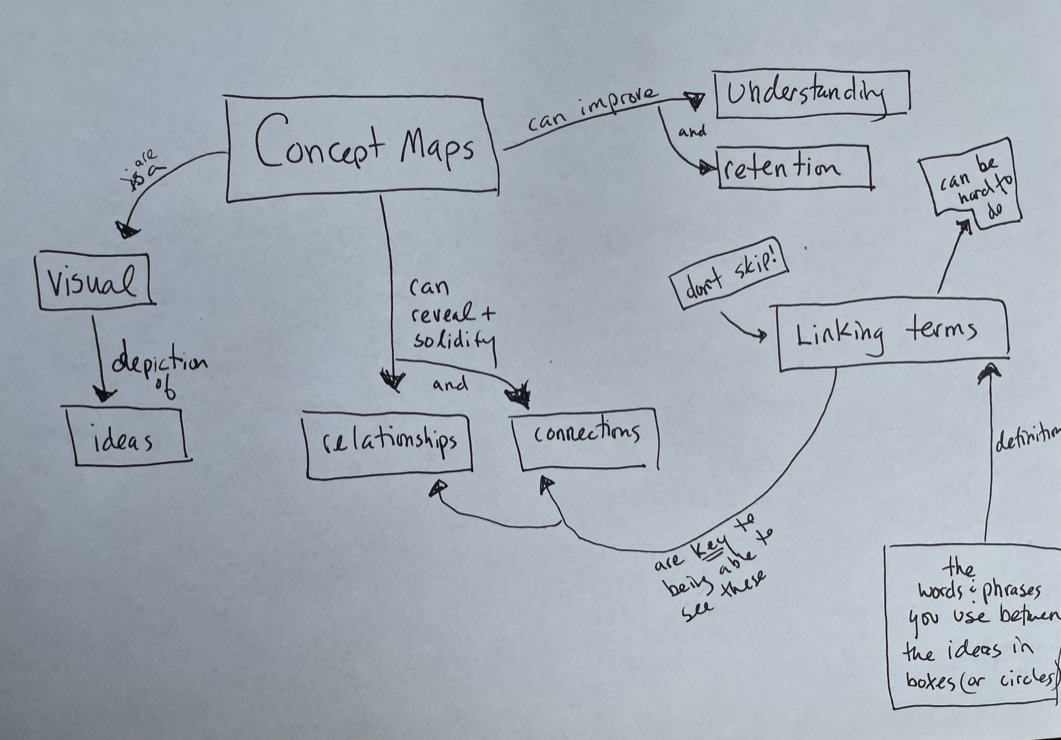
    Concept mapping is a learning technique that represents knowledge through concepts, connecting lines, and linking phrases. The resulting diagram shows relationships between ideas rather than simply listing information.

    A concept is usually written inside a box, circle, or another shape. Lines connect related concepts, while short linking phrases explain the relationship between them.

    For example:

    Plants → require → Sunlight

    Sunlight → provides energy for → Photosynthesis

    Photosynthesis → produces → Glucose and oxygen

    The linking phrases turn separate terms into meaningful statements. Instead of seeing three unrelated facts, you can follow the relationships and explain how the ideas fit together.

    A concept map commonly includes four elements:

    • Concepts: Important ideas, terms, events, or processes.
    • Connecting lines: Visual links between related concepts.
    • Linking phrases: Words that explain the relationship between connected ideas.
    • Cross-links: Connections between different sections of the map that reveal broader relationships.

    Concept maps are especially useful when a subject contains interconnected ideas that need to be understood as a system.

    Why Is Concept Mapping Useful for Students?

    Concept mapping encourages students to organize information actively. Rather than copying material from a textbook, they must decide which concepts matter and determine how those concepts relate to one another.

    1. It Builds Deeper Understanding

    Memorizing a definition may help you answer a basic question, but it may not prepare you to explain a process or apply an idea to a new situation.

    A concept map encourages you to connect definitions with causes, examples, consequences, and related principles.

    For instance, a student studying economics might connect inflation with purchasing power, production costs, consumer demand, and interest rates. These relationships help make the topic more understandable than memorizing each term separately.

    2. It Helps Identify Knowledge Gaps

    When creating a map, you may discover that you know several important terms but cannot explain how they connect.

    Perhaps you understand what photosynthesis means but cannot clearly describe how sunlight, water, carbon dioxide, and glucose relate to the process.

    That uncertainty identifies an area to review. You can return to your notes, consult your textbook, or ask your teacher for clarification before the misunderstanding affects your exam preparation.

    3. It Supports Memory and Revision

    A well-constructed concept map provides a structured overview of a topic. It helps you review major concepts, recall relationships, and identify which areas deserve more attention.

    Research reviews have found positive learning outcomes associated with concept mapping, although its effectiveness varies across subjects, study designs, and teaching approaches. It is best used as part of a broader study routine rather than as a guaranteed shortcut to better grades.

    4. It Encourages Critical Thinking

    Concept mapping can help students evaluate cause-and-effect relationships, compare explanations, and identify links that are not immediately obvious.

    For example, a history student might connect economic pressure, political decisions, public protests, and changes in government. Building these connections encourages the student to consider how several factors contribute to a historical event.

    This makes concept mapping useful for assignments that require explanation, comparison, or analysis.

    How to Create a Concept Map Step by Step

    You do not need special software or artistic skills to create a concept map. You can begin with a blank sheet of paper, a pencil, and your course notes.

    Step 1: Choose a Focus Question

    Start by identifying the question your concept map should answer.

    A focus question keeps your map relevant and prevents it from becoming a collection of unrelated facts.

    For example:

    • How does the water cycle work?
    • What causes inflation?
    • How does the human digestive system function?
    • What factors contributed to a historical revolution?
    • How do ecosystems maintain balance?

    Choose one question that matches your current lesson or study goal.

    Step 2: Identify the Main Concepts

    Review your textbook, lecture notes, or assigned reading. List the key concepts needed to answer your focus question.

    If you are studying the water cycle, your list might include evaporation, condensation, clouds, precipitation, collection, and the Sun’s energy.

    At this stage, focus on important ideas rather than trying to include every sentence from the lesson.

    You can add missing concepts later when you discover that a relationship requires more explanation.

    Step 3: Organize Concepts From General to Specific

    Arrange the concepts according to their level of importance or generality.

    In many concept maps, broader ideas appear near the top, while more specific concepts appear underneath them.

    For example, a biology map could begin with Living Organisms, followed by major groups or systems, then individual structures and their functions.

    Not every topic requires a strict hierarchy. Some subjects are better represented through a sequence, cycle, or network of related factors. Choose the structure that best explains the material.

    Step 4: Connect Related Concepts

    Draw lines between concepts that have a meaningful relationship.

    Do not connect ideas merely because they appear in the same chapter. Ask yourself what makes the relationship important and whether you can explain it clearly.

    For example:

    Water → changes into vapor through → Evaporation

    Water vapor → cools and forms clouds through → Condensation

    Clouds → release water through → Precipitation

    Each connection should communicate a relationship that you could explain in your own words.

    Step 5: Add Linking Phrases

    Linking phrases are one of the most important features of concept mapping.

    Words such as causes, includes, depends on, contributes to, is part of, and results in explain the connection between concepts.

    Compare these two examples:

    • Water cycle — clouds — rain
    • Condensation forms clouds, and clouds produce precipitation.

    The second example communicates more information because the relationships are explicit.

    A useful test is to read each connected set of concepts as a sentence. If the sentence is unclear or inaccurate, revise the connecting phrase or reconsider the relationship.

    Step 6: Add Cross-Links

    Cross-links connect concepts from different branches of your map. They can reveal relationships that might otherwise be overlooked.

    For example, a map about ecosystems could connect sunlight to plant growth, plant growth to food availability, and food availability to animal populations. A cross-link between plant growth and the carbon cycle could show how the same concept contributes to another process.

    You do not need dozens of cross-links. Add them when they explain an important relationship that improves your understanding.

    Step 7: Check and Improve the Map

    Review your finished map using your course materials.

    Ask yourself:

    • Are the main concepts accurate?
    • Do the linking phrases explain the relationships clearly?
    • Have I missed an important concept?
    • Are any connections misleading or unsupported?
    • Can I explain the map without reading directly from my notes?

    Correct mistakes and remove unnecessary information. A good concept map is not the one with the most boxes; it is the one that communicates the topic accurately and clearly.

    Concept Mapping Example: Understanding an Ecosystem

    Suppose you are studying how an ecosystem works. A concept map could begin with Ecosystem as the main concept and branch into living organisms, nonliving factors, food chains, and energy flow.

    The relationships might include:

    • Sunlight provides energy for Producers.
    • Producers provide food for Primary Consumers.
    • Primary Consumers may be eaten by Secondary Consumers.
    • Decomposers break down Dead Organic Matter.
    • Nutrients released by decomposition can be reused by Plants.

    You could then add connections involving water, soil, temperature, and habitat conditions.

    This map shows that an ecosystem is not simply a collection of organisms. It is a network of relationships involving energy, nutrients, and environmental conditions.

    It can also help you prepare for questions such as, “What might happen if the population of a particular consumer decreases?” By tracing the connections, you can begin to reason about possible effects on other organisms.

    Concept Mapping vs. Mind Mapping: What Is the Difference?

    Concept maps and mind maps both organize information visually, but they serve somewhat different purposes.

    FeatureConcept mappingMind mapping
    Main purposeExplain relationships between conceptsOrganize and explore ideas
    Typical structureOften hierarchical or network-basedOften branches outward from a central topic
    Connecting phrasesUsed to explain relationships explicitlyOften optional
    Cross-linksImportant for showing connections across branchesMay be used, but are not always central
    Best suited forUnderstanding systems, processes, and relationshipsBrainstorming, planning, and reviewing broad topics

    For example, a mind map about climate change might list causes, effects, and solutions around a central topic. A concept map would go further by explicitly connecting fossil fuel use to greenhouse gas emissions and emissions to warming, while linking solutions to the problems they address.

    Choose concept mapping when your goal is to explain how ideas relate. Choose mind mapping when you want to generate ideas or organize a topic quickly. You can also use both techniques during different stages of learning.

    How to Use Concept Mapping in Different Subjects

    Concept mapping can be adapted to many areas of study.

    Science and Biology

    Use concept maps to explain biological systems, chemical processes, scientific principles, and relationships between variables.

    For example, you could connect cell structures with their functions or map how energy moves through an ecosystem. In science, accurate connecting phrases are particularly important because they help distinguish established relationships from assumptions.

    History and Social Studies

    Build maps around historical events, causes, consequences, important people, and social conditions.

    A map about a revolution could connect economic inequality, political conflict, public opposition, and changes in leadership. Use the links to distinguish direct causes from contributing factors.

    Mathematics

    Organize mathematical concepts, formulas, definitions, and problem-solving methods.

    A concept map about quadratic equations could connect the standard form of an equation with factoring, completing the square, graphing, and the quadratic formula.

    Add notes about when each method is useful. Then solve practice problems to make sure you can apply the relationships rather than merely recognize them.

    Literature and Language Learning

    Connect literary themes with characters, events, settings, and evidence from a text. In language learning, connect grammatical rules with examples and related sentence structures.

    For example, a literature map might show how a character’s decisions influence the conflict and contribute to a theme. This can help organize ideas before writing an analytical essay.

    Common Concept Mapping Mistakes to Avoid

    Using too many concepts. A crowded map can obscure the relationships that matter most. Start with the main ideas and add details only when they help answer your focus question.

    Leaving connecting lines unexplained. Lines without linking phrases may show that concepts are related but not explain how. Use clear, accurate phrases whenever possible.

    Copying notes without processing them. Copying information into boxes does not automatically create understanding. Summarize ideas in your own words and decide why each relationship matters.

    Ignoring inaccurate connections. A diagram may look logical while containing incorrect information. Check your map against reliable learning materials and correct any unsupported claims.

    Never testing your knowledge. Creating a map is only one part of learning. Try explaining the relationships without looking at the diagram, then answer questions or solve problems related to the topic.

    Spending too long on design. Use simple shapes and readable labels. The value comes from thinking about the relationships, not from making the diagram visually elaborate.

    A Simple Concept Mapping Study Routine

    Try this 25-minute session when learning a new topic:

    1. Minutes 1–5: Read your notes and identify the focus question and key concepts.
    2. Minutes 6–12: Arrange the concepts and connect them with meaningful linking phrases.
    3. Minutes 13–17: Add cross-links and check the accuracy of important relationships.
    4. Minutes 18–22: Cover your notes and explain the map from memory.
    5. Minutes 23–25: Identify gaps, correct mistakes, and note questions for further review.

    For complex subjects, you may need more time. You can also create a first version after a lesson and update it as your understanding develops.

    Paper-based maps are useful for quick drafting, while digital tools can make large maps easier to rearrange and share. The best option is the one that lets you focus on the concepts instead of the technology.

    Final Thoughts

    Concept mapping for students offers a structured way to organize knowledge, explain relationships, and identify gaps in understanding. By choosing a clear focus question, arranging important concepts, using meaningful linking phrases, and checking connections carefully, you can build a more complete picture of a challenging subject.

    The most important step is to create the map yourself and use it to explain the material, rather than treating it as a decorative summary. Combine concept maps with retrieval practice, textbook reading, and subject-specific exercises to strengthen your learning routine.

    Start with one topic from your next lesson. Identify its main concepts, connect them with accurate phrases, and see whether you can explain the resulting map without your notes. With regular practice, concept mapping can become a useful tool for learning more thoughtfully and preparing for academic assessments.

  • How to Use Mind Maps to Understand Difficult Subjects

    How to Use Mind Maps to Understand Difficult Subjects

    Understanding a difficult subject can feel overwhelming when your notes are filled with long paragraphs, complicated definitions, and ideas that seem unrelated. Whether you are studying biology, mathematics, history, economics, or another challenging subject, it can be difficult to see how individual concepts fit together.

    One practical way to organize information is to use mind maps. A mind map turns a central topic into a visual structure of connected ideas, helping you break complex material into smaller, more manageable sections.

    Learning how to use mind maps for studying can help you organize your notes, identify relationships between concepts, review important information, and prepare for exams more effectively. Instead of simply rereading pages of notes, you can create a visual overview of what you are learning and use it to test your understanding.

    In this guide, you will learn what mind maps are, how to create them step by step, which subjects benefit from them, and how to use them as part of a productive study routine.

    What Is a Mind Map?

    A mind map is a visual learning tool that organizes information around a central topic. Related ideas branch out from the main topic, and smaller branches provide supporting details, examples, definitions, or explanations.

    For example, if you are studying the human digestive system, you could write Human Digestive System in the center of a page. Your main branches might include the mouth, esophagus, stomach, small intestine, large intestine, and digestive enzymes. Smaller branches could explain each organ’s function and its role in digestion.

    This structure makes it easier to see how different parts of a topic relate to one another.

    Mind maps usually include:

    • A central topic: The main subject you want to understand.
    • Main branches: The major categories or concepts.
    • Sub-branches: Supporting facts, explanations, examples, and definitions.
    • Keywords: Short phrases that represent important information.
    • Visual cues: Colors, symbols, arrows, or simple drawings that help distinguish ideas.

    Unlike traditional notes, which are often written in a linear format, mind maps show information in a connected visual arrangement.

    Why Are Mind Maps Useful for Difficult Subjects?

    Difficult subjects often contain many related concepts that must be understood together. A mind map helps organize these concepts so you can focus on both individual details and the bigger picture.

    1. They Break Complex Topics Into Smaller Parts

    A large chapter can seem difficult because it contains too much information to process at once. A mind map divides the chapter into smaller categories, allowing you to concentrate on one section at a time.

    For instance, a chapter about climate change might be divided into causes, environmental effects, economic consequences, and possible solutions. Each branch can then be developed separately.

    This approach makes the material feel more manageable and gives you a clear starting point.

    2. They Help You Identify Connections

    Understanding a subject involves more than memorizing definitions. You also need to understand how ideas influence, support, or differ from one another.

    A mind map can reveal these relationships. In economics, for example, you could connect inflation with purchasing power, production costs, interest rates, and consumer demand.

    Seeing these relationships together may help you develop a deeper understanding of the topic rather than treating each concept as an isolated fact.

    3. They Make Revision More Organized

    When exam preparation begins, students often need to review several chapters in a limited amount of time. A well-organized mind map provides a compact overview of the most important concepts.

    You can use it to identify key definitions, major processes, supporting examples, and areas that require additional revision.

    However, a mind map should complement detailed notes and practice questions rather than replace every other study method.

    4. They Encourage Active Learning

    Creating a mind map requires you to decide which ideas are important and how they relate to the main topic. This process can encourage you to organize information in your own words.

    Research on concept mapping has found positive learning benefits across several educational settings, although results depend on how the maps are created and used. For stronger revision, try drawing your map from memory instead of copying information directly from a textbook.

    How to Use Mind Maps for Studying: A Step-by-Step Guide

    You do not need advanced drawing skills or expensive software to create an effective mind map. A sheet of paper and a pen are enough to get started.

    Step 1: Choose One Specific Topic

    Begin with a topic that is narrow enough to organize clearly.

    Instead of creating a map for an entire subject such as biology, choose a specific chapter or concept, such as photosynthesis, cell division, or the nervous system.

    A focused topic makes it easier to identify the most important information without overcrowding the page.

    Before you begin, ask yourself what you want to understand by the end of the study session.

    Step 2: Write the Main Idea in the Center

    Place the topic in the center of your page and draw a circle or shape around it.

    For example, if you are studying photosynthesis, write Photosynthesis in the center. You can add a small drawing of a leaf if it helps you remember the topic.

    Keep the central idea short and easy to recognize. The purpose is to establish a clear starting point for the rest of your map.

    Step 3: Create the Main Branches

    Identify approximately four to seven major categories related to the central topic. The exact number depends on the complexity of the material.

    For a photosynthesis mind map, the main branches might be:

    • Definition
    • Requirements
    • Location
    • Process
    • Products
    • Importance

    Draw a line from the central topic to each category.

    These main branches provide the basic structure of your map. If you cannot identify the major categories, review your textbook headings or lecture notes before continuing.

    Step 4: Add Supporting Details

    Expand each main branch with relevant information.

    Under Requirements, for example, you might include sunlight, water, carbon dioxide, and chlorophyll. Under Products, you could add glucose and oxygen.

    Use short keywords and phrases instead of copying complete paragraphs. If a branch becomes crowded, simplify the wording or create another level of sub-branches.

    The goal is to organize the information clearly, not to fit every sentence from your textbook onto one page.

    Step 5: Show Relationships Between Ideas

    Look for connections that explain how the different parts of the topic work together.

    In a photosynthesis map, you could use arrows to show that plants absorb light energy and use it during the process. You might connect sunlight, water, and carbon dioxide to the production of glucose and oxygen.

    For subjects such as history, arrows can show cause-and-effect relationships. In mathematics, they can connect a formula to the conditions in which it is used.

    Label important arrows with words such as causes, requires, leads to, or results in when the relationship is not obvious.

    Step 6: Use Colors and Symbols Carefully

    Colors can help distinguish categories, but using too many can make your map harder to read.

    For example, you could use one color for definitions, another for examples, and a third for processes or consequences. Simple symbols can highlight formulas, dates, important terms, or questions you still need to answer.

    Keep your visual system consistent across the map.

    Remember that decoration is optional. A simple, readable map is more useful than a beautiful design that takes too long to create.

    Step 7: Test Your Understanding From Memory

    This is one of the most important steps.

    After completing your initial map, put your textbook and notes aside. On a blank sheet of paper, try to recreate the central topic, major branches, and key details from memory.

    Then compare your new map with the original material.

    Notice which concepts you remembered correctly, which connections you missed, and which details you could not explain. Review those areas before testing yourself again.

    This method combines visual organization with retrieval practice, giving you a more active way to revise than simply looking at a completed map.

    Example of a Mind Map for a Difficult Subject

    Imagine that you are studying the causes and effects of climate change. You could organize the topic as follows:

    Central topic: Climate Change

    • Causes
      • Burning fossil fuels
      • Deforestation
      • Greenhouse gas emissions
    • Environmental effects
      • Rising global temperatures
      • Melting glaciers
      • Sea-level rise
      • Changes in ecosystems
    • Human impacts
      • Food and water challenges
      • Health risks
      • Damage to infrastructure
    • Possible solutions
      • Renewable energy
      • Energy efficiency
      • Forest conservation
      • Lower-emission transport

    To make this map more useful, add arrows connecting causes to their effects and solutions to the problems they address. You can also add examples from your course materials.

    This structure gives you an overview of the topic while helping you identify relationships that might appear in essay questions or examinations.

    Which Subjects Are Best for Mind Mapping?

    Mind maps can be adapted to many academic subjects, although some topics benefit more from them than others.

    Biology and Other Sciences

    Use mind maps to organize processes, systems, classifications, and relationships. For example, a biology map could connect cell structures with their functions, while a chemistry map could organize types of chemical reactions.

    For complicated processes, add numbered stages or arrows to show the correct sequence.

    History and Social Studies

    Create branches for important events, causes, consequences, people, dates, and historical movements.

    A map about a historical revolution could connect economic conditions, political tensions, key events, and long-term consequences. This can help you prepare for questions that ask you to explain why something happened.

    Mathematics

    Mind maps can help organize formulas, definitions, problem types, and solution methods.

    For example, a map about quadratic equations could include standard form, factoring, completing the square, and the quadratic formula. Under each branch, add a sample problem and note when that method is useful.

    Mind maps are not a substitute for solving problems. Use them to organize methods, then practise applying those methods independently.

    Literature and Language Learning

    For literature, connect characters, themes, settings, conflicts, and important quotations from your assigned text.

    For language learning, you can organize vocabulary by topic, group related words, and connect grammar rules with examples. This approach may make it easier to see patterns across related concepts.

    Common Mind Mapping Mistakes to Avoid

    Mind maps are most useful when they support understanding. A few common mistakes can reduce their effectiveness.

    Copying entire paragraphs. Long sentences make branches crowded and defeat the purpose of creating a visual overview. Summarize information using keywords and short phrases.

    Including too much information. Trying to include every detail from a chapter can make the map confusing. Focus on major concepts first, then add details that explain important relationships.

    Making the map decorative instead of useful. Excessive colors, images, and formatting can consume time without improving your understanding. Choose visual elements that have a clear purpose.

    Creating a map without checking accuracy. An attractive map can still contain incorrect definitions or misleading connections. Compare it with reliable course materials and correct any mistakes.

    Only looking at the finished map. Recognition is not the same as being able to recall or explain information independently. Recreate the map from memory and answer questions without looking at your notes.

    Using mind maps for everything. Some tasks require detailed written explanations, calculations, experiments, or extended reading. Use mind maps when they suit the material, and combine them with other study methods when necessary.

    How to Include Mind Maps in Your Study Routine

    You do not need to spend hours creating a map for every lesson. A short, structured routine can make the technique easier to maintain.

    Try this 25-minute study session:

    1. First 5 minutes: Review the lesson and identify its main ideas.
    2. Next 10 minutes: Create a mind map using keywords, branches, and important connections.
    3. Next 5 minutes: Put your notes aside and recreate the main structure from memory.
    4. Final 5 minutes: Check your work, correct mistakes, and write down questions that still need answers.

    For longer or more difficult topics, extend the session as needed.

    Return to your map during later revision sessions. Try recalling its branches before checking the original, and use practice questions to determine whether you can apply what you learned.

    You can create mind maps on paper or use a digital tool. Paper is convenient when you want to work quickly without distractions, while digital maps can be useful when you need to reorganize branches or work with a large topic. Choose the format that helps you think clearly.

    Final Thoughts

    Learning how to use mind maps for studying can give you a practical way to organize complex information, identify connections, and review challenging subjects. By placing the main topic at the center, developing clear branches, adding relevant details, and testing yourself from memory, you can turn a large amount of information into a more manageable learning structure.

    The most effective approach is to keep your maps focused, accurate, and easy to read. Use them alongside practice questions, detailed notes, and regular revision rather than treating them as a complete replacement for other learning methods.

    Start with one difficult chapter, create a simple mind map, and see whether it helps you explain the topic more clearly. With regular practice, mind mapping can become a useful part of your study routine and help you approach challenging material with greater confidence.

  • How to Make Group Study Sessions More Productive

    How to Make Group Study Sessions More Productive

    Studying with classmates can be a useful way to understand difficult subjects, exchange ideas, and prepare for exams. However, not every group study session leads to meaningful progress. Sometimes, students spend more time chatting, checking their phones, or reading the same notes together than actually learning.

    The key to productive group study sessions is having a clear purpose, a simple plan, and activities that require everyone to participate. When students explain concepts to one another, ask questions, solve problems, and identify gaps in their knowledge, studying together can become more engaging and effective.

    Whether you are preparing for a university examination, working through a challenging course, or revising with friends, a few practical changes can help you make better use of your time.

    In this guide, you will learn how to organize a study group, divide responsibilities, stay focused, handle disagreements, and use collaborative learning techniques to improve your understanding.

    What Makes a Group Study Session Productive?

    A productive study session is one in which participants make measurable progress toward a learning goal. That might mean understanding a difficult concept, solving a set of practice questions, reviewing an assignment, or identifying topics that need further revision.

    Simply sitting together with textbooks open does not guarantee effective learning. Group members need to engage actively with the material rather than rely on conversation or passive reading alone.

    Effective study groups often share several characteristics:

    • Clear objectives: Everyone knows what the session should accomplish.
    • Active participation: Each member contributes ideas, questions, or explanations.
    • Mutual support: Students help one another understand concepts without embarrassment.
    • Good time management: The group balances discussion with independent thinking.
    • Shared accountability: Members encourage one another to prepare and follow through.
    • Individual responsibility: Everyone remains responsible for learning the material personally.

    Research on collaborative learning suggests that peer discussion and explanation can support understanding. However, the benefits depend on how the group works, and group study does not guarantee higher grades for every student or subject.

    1. Set a Clear Goal Before the Session

    One of the easiest ways to improve group study is to decide what you want to achieve before meeting.

    Without a specific goal, the session can become an open-ended conversation about everything students need to study. This often leads to unfinished tasks and uncertainty about whether the meeting was worthwhile.

    Instead, choose one or two realistic objectives.

    For example, your group might aim to:

    • Review two chapters of a biology course.
    • Solve ten practice problems in mathematics.
    • Compare key theories for a psychology examination.
    • Discuss the main arguments in a history reading.
    • Identify and correct mistakes from a previous test.

    Share the objectives with everyone before the meeting so participants can prepare relevant materials.

    At the end, review what the group completed and identify anything that remains unclear. This gives everyone a simple way to measure progress.

    2. Keep the Group Small Enough for Everyone to Participate

    The ideal group size depends on the subject, the activity, and the students involved. However, a small group of around three to five students is often a practical starting point because it gives each person opportunities to contribute without making discussion difficult to manage.

    Very large groups can make it easier for some members to remain silent while others dominate the conversation. Smaller groups can also be easier to schedule and keep focused.

    When choosing group members, look for classmates who are willing to prepare, ask questions, explain ideas, and respect different learning styles.

    You do not need to choose only friends or students with identical grades. Different perspectives can be helpful, provided everyone participates constructively.

    If one member understands a topic well, they can explain it to others. In return, another student might identify a mistake, offer a different example, or ask a question that reveals a gap in everyone’s understanding.

    The goal is not to create a competition. It is to make learning easier through cooperation.

    3. Create a Simple Study Session Agenda

    A short agenda helps your group use its time intentionally. It does not need to be complicated or overly formal.

    For a 60-minute session, you could use this structure:

    TimeActivity
    5 minutesAgree on goals and review preparation
    10 minutesIdentify difficult concepts
    20 minutesExplain topics and solve practice questions
    15 minutesComplete a group quiz or discussion
    5 minutesReview mistakes and unanswered questions
    5 minutesDecide what each person should study next

    Adjust the timing according to the subject and the group’s needs. A complex problem-solving session may require longer practice periods, while a short revision meeting may need less discussion.

    Keep the agenda visible during the session. If the group gets distracted, return to the next activity instead of allowing the conversation to drift.

    A clear structure also helps everyone understand that group study is a learning activity, not simply a social gathering.

    4. Use Active Learning Instead of Just Reading Notes

    One of the most common group study mistakes is reading notes aloud while everyone else listens. This may help introduce a topic, but it does not necessarily show whether each student understands or remembers the information.

    Instead, choose activities that require participants to retrieve information, explain concepts, and apply what they have learned.

    Try the teach-back method

    Ask one student to explain a concept in simple language without reading directly from the textbook. Other members can ask questions or point out anything that needs clarification.

    For example, a biology student might explain how photosynthesis works, while the rest of the group checks whether the explanation covers the important stages.

    Quiz one another

    Prepare questions before the session and take turns answering them. Flashcards, short-answer questions, and practice tests can help reveal gaps in understanding.

    Solve problems together

    For mathematics, physics, economics, or similar subjects, work through practice problems. Ask each person to explain the reasoning behind their answer, not just provide the final result.

    Compare different explanations

    If two students approach a problem differently, discuss why. Compare the steps, check the evidence, and use reliable course materials to verify the result.

    These activities make participation more meaningful and help students discover what they still need to practise independently.

    5. Assign Roles to Keep Everyone Involved

    When responsibilities are unclear, one student may end up organizing everything while others contribute very little. Assigning simple roles can help distribute the work.

    Useful roles include:

    • Facilitator: Keeps the group focused on its objectives.
    • Timekeeper: Helps the group move between activities.
    • Question leader: Prepares questions and encourages discussion.
    • Note-taker: Records important explanations and unresolved questions.
    • Checker: Verifies answers against textbooks, lecture materials, or other reliable course resources.

    You do not need a separate person for every role. In a small group, students can combine responsibilities or rotate them between sessions.

    Rotating roles is especially helpful because it gives everyone a chance to practise different skills. A student who usually takes notes may benefit from leading a discussion, while a confident speaker may learn by checking answers carefully.

    Remember that roles should support learning, not create unnecessary administration. Keep them simple and flexible.

    6. Encourage Questions and Respectful Discussion

    A good study group should make it easier to admit when something is confusing.

    Students sometimes avoid asking questions because they worry that others will judge them. Unfortunately, this can allow misunderstandings to continue until the examination.

    Establish a simple rule: questions are welcome, and disagreements should focus on ideas rather than personal criticism.

    Use phrases such as:

    • “Could you explain how you reached that answer?”
    • “Can we check this point in the lecture notes?”
    • “I understood it differently. Let’s compare our reasoning.”
    • “Which part of this concept is still unclear?”

    Encourage students to explain their reasoning and support claims with evidence. If the group cannot resolve a disagreement, write down the question and ask the instructor or consult an authoritative course source.

    Do not assume that the most confident speaker is always correct. A respectful group checks its answers instead of accepting them without discussion.

    7. Manage Distractions and Keep the Session Focused

    Phones, unrelated conversations, and social media can quickly reduce the value of a group meeting.

    Before starting, agree on a few practical ground rules. For example, everyone might silence notifications, keep phones away unless needed for studying, and save unrelated conversations for the break.

    Choose a location that suits the activity. A quiet library room may be suitable for detailed revision, while a collaborative study space may work better for discussing problems.

    Online study groups need similar boundaries. Use a shared agenda, keep unrelated browser tabs closed, and agree on how participants will ask questions.

    If concentration begins to drop, take a short break rather than forcing everyone to continue. After the break, return to a specific task.

    The goal is not to eliminate every moment of conversation. It is to make sure that social interaction does not replace the learning activity the group agreed to complete.

    8. Use Shared Digital Tools Carefully

    Digital tools can make it easier to coordinate sessions, organize notes, and prepare practice materials.

    Your group might use a shared document for summaries, a calendar for scheduling, flashcard software for revision, or a video meeting platform when members cannot meet in person.

    To keep these tools useful:

    • Create one clearly organized folder for each course.
    • Label documents with descriptive names and dates.
    • Record unresolved questions separately from confirmed answers.
    • Give members clear editing responsibilities.
    • Check information against course materials before sharing it.

    Be careful not to turn a shared document into a collection of copied notes that nobody reviews. Each student should still test their own understanding and follow the institution’s rules on academic integrity and collaboration.

    If you use AI tools to generate practice questions or explanations, verify important details with reliable course materials. Do not share private student information or upload restricted course content without permission.

    9. Make Sure Everyone Prepares Before the Meeting

    Group study works better when members arrive with some familiarity with the material.

    If everyone encounters the topic for the first time during the session, much of the meeting may be spent reading basic information instead of discussing difficult questions.

    Before each meeting, ask participants to complete a small preparation task. They might read a specified section, review lecture slides, attempt three practice questions, or bring two questions they could not answer.

    Preparation does not need to take hours. The aim is to give the group a useful starting point.

    At the beginning of the meeting, ask each person to identify one topic they understand and one they find challenging. This helps the group prioritize its time.

    If a member has not prepared, avoid spending the entire session repeating material for that person. Offer a brief explanation where appropriate, then continue with the planned activities.

    10. Finish With a Quick Review and Individual Study Plan

    The final few minutes of a group study session are valuable. Use them to check what the group achieved and decide what needs further attention.

    Ask each member to answer three questions:

    1. What did I understand better today?
    2. Which question or concept still confuses me?
    3. What will I review independently before the next session?

    Record unanswered questions in a shared list and decide who will verify them. This prevents uncertainty from being forgotten once the meeting ends.

    After the session, spend a few minutes recalling the main concepts without looking at the group notes. Independent recall helps you check what you personally remember, rather than relying only on explanations heard from others.

    Group study should support your individual learning, not replace it. You may understand a topic during discussion but still need practice to recall and apply it on your own.

    Common Group Study Mistakes to Avoid

    Even a well-intentioned group can become less productive if it develops unhelpful habits.

    Meeting without a plan: Choose clear objectives before starting.

    Letting one person do all the work: Rotate responsibilities and invite every member to contribute.

    Confusing familiarity with understanding: Use quizzes and practice problems instead of relying only on rereading.

    Accepting incorrect answers: Verify uncertain information with course materials or an instructor.

    Spending too much time socializing: Schedule breaks and return to the agenda afterward.

    Depending entirely on the group: Review material independently so you can answer questions without help.

    Holding meetings that are too long: Choose a manageable duration and take breaks when needed.

    Recognizing these problems early helps the group adjust before meetings become frustrating or ineffective.

    Frequently Asked Questions

    How long should a group study session last?

    There is no single ideal duration. Around 45–90 minutes can be a practical starting point for many groups, depending on the subject and participants. Use a clear agenda and take breaks when concentration drops.

    How many students should be in a study group?

    A group of three to five students is often manageable because everyone can participate. Larger groups can also work if they have clear roles, structured activities, and enough opportunities for each person to contribute.

    Is group study better than studying alone?

    Neither method is always better. Group study can help students exchange explanations, discuss difficult concepts, and stay accountable. Individual study provides time for focused practice and checking personal understanding. Combining both approaches is often useful.

    What should students do during group study?

    Use activities such as teaching concepts to one another, answering practice questions, discussing mistakes, solving problems, and reviewing difficult material. Begin with a clear goal and finish by identifying what each student needs to revise independently.

    How can an online study group stay productive?

    Set a meeting agenda, assign simple roles, use a shared document, silence unnecessary notifications, and ask everyone to prepare beforehand. Keep the meeting focused on specific learning tasks and verify shared information before relying on it.

    Final Thoughts

    Making group study sessions more productive requires more than finding classmates and opening textbooks. It involves setting clear goals, preparing before meetings, encouraging active participation, and using activities that help everyone understand the material.

    Start small: choose a manageable group, agree on one learning objective, and plan a session that includes explanations, practice questions, and a short review. Keep distractions under control, respect different viewpoints, and make time for independent study afterward.

    A productive study group should help every member become a more confident and independent learner. When collaboration is organized around meaningful learning goals, studying together can become a valuable part of your academic routine.

  • Why Sleep Matters for Student Learning and Memory

    Why Sleep Matters for Student Learning and Memory

    Students often sacrifice sleep to finish assignments, prepare for exams, or revise difficult subjects. Staying up late may seem like a practical way to gain extra study time, especially when deadlines are approaching. However, sleep is an essential part of the learning process, not simply time away from academic work.

    Understanding the importance of sleep for students can help you make better decisions about studying, remembering information, managing stress, and preparing for exams. Sleep supports attention, memory, emotional well-being, and the brain processes involved in learning new material.

    Whether you are in school, college, or university, developing healthy sleep habits can help you approach your studies with a clearer mind and a more sustainable routine.

    In this guide, you will learn how sleep affects learning and memory, how much sleep students generally need, what happens when you regularly sleep too little, and how to build a sleep routine that supports academic success.

    Why Is Sleep Important for Students?

    Sleep allows the brain and body to carry out important processes that support everyday functioning. Although you are not actively studying while asleep, your brain remains active through different stages of sleep.

    These stages contribute to physical recovery, attention, memory processing, and emotional regulation. When students consistently get enough quality sleep, they are better positioned to concentrate, learn new information, and manage the demands of academic life.

    Sleep is especially important for students because learning often involves several mental tasks at once. You may need to understand a new concept, remember earlier lessons, solve problems, and apply information under time pressure.

    Insufficient sleep can make these tasks more difficult. Getting adequate rest does not guarantee high grades, but it supports the mental abilities students rely on to learn effectively.

    1. Sleep Helps Strengthen Memory

    One of the main reasons sleep matters for students is its relationship with memory.

    When you learn something new, such as a mathematical formula, a historical event, or a scientific concept, your brain begins forming memories of that information. These memories may initially be fragile and require further processing.

    Sleep helps the brain strengthen and organize some of the information learned during the day. This process is often called memory consolidation.

    For example, imagine studying a list of vocabulary words in the evening. Reviewing the words helps you learn them, while a good night’s sleep supports the processes that help you retain what you practised.

    This is why effective studying involves more than the number of hours spent reading. It also involves giving your brain opportunities to process and retain information.

    Practical tip: Review important material before bed if it fits your schedule, but do not sacrifice sleep to do so. Combine regular revision with adequate rest rather than relying on a single late-night study session.

    2. Sleep Improves Attention and Concentration

    Concentration is essential for understanding lessons, reading academic material, and completing assignments accurately.

    When you are tired, you may find yourself rereading the same paragraph, losing track of a teacher’s explanation, or making mistakes on questions you normally understand. You might also become distracted more easily.

    Sleep supports the attention and alertness needed to stay engaged with academic tasks. Without enough rest, even a familiar subject can feel unusually difficult.

    Consider two students preparing for an examination. One studies late into the night and arrives exhausted. The other follows a planned revision schedule and gets sufficient sleep. The second student may be better prepared to concentrate during the test because they have allowed time for recovery.

    Of course, preparation and prior knowledge also matter. Sleep is one part of academic performance, not the only factor.

    To support concentration, try maintaining a regular sleep schedule, taking breaks during long study sessions, and avoiding repeated all-night study routines.

    3. Sleep Supports Learning New Information

    Learning requires the brain to take in new information, understand it, connect it to existing knowledge, and retrieve it when needed.

    Sleep contributes to this process in more than one way. Being well-rested before a lesson can help you pay attention and take in information. Sleeping after learning supports memory processes that help preserve some of what you studied.

    This means both the night before and the night after an important learning session can matter.

    For instance, if you are preparing for a biology examination, you could review cell structures, test yourself using flashcards, and then follow your normal sleep routine. The next day, return to the same material and check what you remember.

    This approach combines active learning with rest. It is generally more sensible than repeatedly studying while exhausted and hoping that extra hours will make up for poor concentration.

    4. Sleep Can Help With Problem-Solving

    Academic work often requires more than memorizing facts. Students must also compare ideas, interpret evidence, solve equations, and apply concepts to unfamiliar questions.

    Sleep supports cognitive functions involved in thinking and decision-making. When you are sleep-deprived, it may become harder to consider alternatives, notice errors, or work through a complicated problem patiently.

    Suppose you are struggling with a difficult mathematics problem late at night. Continuing to work when you are exhausted may not be the most useful option. Depending on your deadline, it may be better to note where you became stuck, get adequate rest, and return to the problem with a clearer mind.

    A break and a night of sleep will not automatically solve every problem. However, adequate rest helps support the mental processes you need to work through challenges.

    5. Sleep Influences Mood and Stress Levels

    Student life can involve deadlines, competitive environments, financial concerns, and pressure to achieve good results. Poor sleep can make it more difficult to manage these challenges.

    When you do not sleep enough, you may feel more irritable, impatient, worried, or emotionally overwhelmed. Small academic setbacks can seem more serious, and it may become harder to respond calmly to feedback or unexpected problems.

    Adequate sleep supports emotional well-being and can make daily demands easier to manage. It does not eliminate exam anxiety or other mental health concerns, but it is an important part of looking after yourself.

    To support your mood during busy academic periods:

    • Avoid making all-night studying a regular habit.
    • Keep some time for relaxing activities and social connections.
    • Use a realistic study schedule instead of working continuously.
    • Try to maintain consistent sleeping and waking times.
    • Seek support if stress becomes difficult to manage.

    Academic success should not require sacrificing your well-being every week.

    6. How Much Sleep Do Students Need?

    The amount of sleep you need depends largely on your age. General recommendations from the Centers for Disease Control and Prevention and sleep medicine experts provide a useful starting point.

    Age groupRecommended sleep per 24 hours
    Children aged 6–129–12 hours
    Teenagers aged 13–178–10 hours
    Adults aged 18–60At least 7 hours

    Individual needs can vary, and sleep quality matters alongside the number of hours you spend in bed.

    University students who are adults should generally aim for at least seven hours of sleep each night. Teenagers usually need more. If you regularly wake up feeling exhausted despite allowing enough time for sleep, consider discussing the problem with a healthcare professional.

    These recommendations are general guidelines, not a test you need to pass perfectly every night. Focus on establishing a consistent routine that gives you enough opportunity to rest.

    7. What Happens When Students Do Not Get Enough Sleep?

    Occasionally having a short night may happen during a demanding week. However, regularly getting insufficient sleep can affect both academic work and everyday well-being.

    Possible effects include:

    Reduced concentration: You may struggle to follow lectures, complete readings, or stay focused during examinations.

    Memory difficulties: Learning and recalling information can become more challenging.

    Slower responses: Tiredness may affect how quickly you process information and react to situations.

    More mistakes: Fatigue can make it harder to check your work carefully or make sound decisions.

    Mood changes: You may feel more irritable, stressed, or emotionally sensitive.

    Lower daily energy: Ordinary activities may feel more demanding, leaving less energy for classes, exercise, and social interaction.

    Sleep deprivation affects people differently, and one poor night does not determine your academic future. The greater concern is a repeated pattern of insufficient or poor-quality sleep.

    If your schedule consistently prevents you from getting enough rest, it may be time to review your workload and study habits rather than simply trying to tolerate the exhaustion.

    8. Why All-Nighters Are Usually a Poor Study Strategy

    An all-nighter is a study session that continues through the night with little or no sleep. Some students use this approach before examinations because they believe every extra hour of revision will improve their results.

    However, more study time does not always mean more effective learning.

    If you stay awake for most of the night, you may spend longer with your notes but find it harder to concentrate, retrieve information, and think clearly the next day. You also lose an opportunity for sleep-related memory processing.

    A better approach is to spread revision across several days whenever possible.

    Try this instead:

    1. Identify the topics most important for the examination.
    2. Divide them into manageable study sessions.
    3. Use practice questions and active recall to check your understanding.
    4. Review difficult topics again later.
    5. Stop studying at a reasonable time and allow enough time for sleep.

    If an examination is approaching and you have not covered everything, prioritize the most important material rather than sacrificing the entire night. A realistic plan is usually more helpful than attempting to learn an entire course at once.

    9. Practical Tips for Better Sleep During the School Year

    Healthy sleep habits do not need to be complicated. Small, consistent changes can help you create a routine that fits around classes, assignments, and personal responsibilities.

    Keep a consistent sleep schedule

    Try to go to bed and wake up at roughly the same time every day, including weekends when practical. A regular schedule helps establish a predictable sleep-wake rhythm.

    Create a relaxing bedtime routine

    Set aside time before bed to slow down. You could prepare your bag for the next day, take a warm shower, read something relaxing, or listen to quiet music.

    Reduce screen use before bedtime

    Phones, laptops, and other devices can keep you mentally engaged when you should be winding down. Try putting them away at least 30 minutes before bed and avoid activities that make you feel more alert or stressed.

    Be mindful of caffeine

    Coffee, energy drinks, and some teas contain caffeine, which can interfere with sleep for several hours. If you have difficulty falling asleep, try limiting caffeine in the afternoon and evening.

    Make your sleep environment comfortable

    Where possible, keep your sleeping area dark, quiet, and comfortably cool. Reduce interruptions from notifications and other devices.

    Get daylight and physical activity

    Spending time outdoors during the day and being physically active can support a healthy sleep routine. Choose activities that suit your schedule and ability.

    Plan your study sessions earlier

    Avoid leaving every difficult task until late at night. Planning revision in advance can reduce the temptation to sacrifice sleep before deadlines.

    You do not have to adopt every habit at once. Start with one or two changes and build a routine that you can maintain.

    10. How to Balance Studying and Sleep Before Exams

    Examination periods can make it especially difficult to protect your sleep. You may have several tests in one week, assignments to submit, and topics that still need revision.

    The solution is to plan around both learning and recovery.

    Start by listing your exam dates and identifying the subjects that need the most attention. Break large topics into smaller sections and schedule revision across the available days.

    Use active recall, practice tests, and spaced review to make your study sessions more focused. Take short breaks when your concentration drops, and set a reasonable stopping time for the evening.

    If you are behind schedule, identify the most important material rather than trying to cover every detail perfectly. Where possible, ask your teacher or lecturer which topics and learning objectives deserve particular attention.

    Most importantly, avoid treating sleep as a reward you receive only after all the work is finished. Academic work can expand to fill every available hour, so sleep needs to be part of the plan from the beginning.

    Frequently Asked Questions

    Does sleep help students remember what they study?

    Yes. Sleep supports memory consolidation, a set of processes through which the brain strengthens and organizes some of the information learned during the day. Getting adequate sleep both before and after learning can support memory and attention.

    Is six hours of sleep enough for a student?

    It depends on age and individual needs, but six hours is below general recommendations for most teenagers and adults. Teenagers aged 13–17 are generally advised to get 8–10 hours, while adults aged 18–60 should usually get at least seven hours per night.

    Is it better to study or sleep before an exam?

    If you have to choose between an all-night revision session and getting adequate sleep, protecting your sleep is generally the wiser choice. Use the time available for focused revision, review key concepts, and avoid sacrificing the entire night to study.

    Can poor sleep affect academic performance?

    Yes. Insufficient sleep can interfere with attention, learning, memory, mood, and decision-making. These functions are important for completing assignments, following lessons, and answering exam questions effectively.

    How can students improve sleep during exams?

    Create a revision schedule in advance, maintain a regular sleep routine, limit late-day caffeine, reduce screen use before bed, and avoid all-nighters. Breaking revision into smaller sessions can help you prepare without repeatedly sacrificing rest.

    What should I do if I cannot sleep even when I have enough time?

    Try maintaining consistent sleep and wake times, creating a relaxing bedtime routine, and reducing caffeine late in the day. If sleep problems continue or affect your daily functioning, speak with a healthcare professional to discuss possible causes and suitable support.

    Final Thoughts

    Understanding the importance of sleep for students can change how you approach academic work. Sleep supports memory, concentration, learning, problem-solving, and emotional well-being—all of which contribute to your ability to study effectively.

    Instead of trying to gain more study hours by staying awake all night, build a routine that combines focused revision with adequate rest. Keep a consistent sleep schedule, plan ahead for examinations, and make changes when your workload becomes difficult to manage.

    You do not need a perfect routine every night. The goal is to develop habits that support both your education and your health over time.

    Good studying is not only about how much time you spend with your books. It is also about giving your brain the conditions it needs to learn, remember, and think clearly.

  • How to Recover From Academic Burnout as a Student

    How to Recover From Academic Burnout as a Student

    Academic life can be rewarding, but constant assignments, exams, deadlines, and pressure to succeed can eventually become overwhelming. You may find yourself studying for hours without absorbing information, avoiding tasks you once handled easily, or feeling exhausted even after taking a break. If this sounds familiar, you may be experiencing academic burnout.

    Learning how to recover from academic burnout starts with understanding that exhaustion is not a sign of laziness or a lack of ability. It may be a signal that your current workload, expectations, and recovery habits are no longer working well together.

    The solution is not always to study harder or force yourself to become productive overnight. Instead, recovery involves reducing unnecessary pressure, rebuilding healthy routines, adjusting your study habits, and seeking support when needed.

    In this guide, you will learn how to recognize academic burnout, take practical steps toward recovery, regain motivation gradually, and reduce the risk of becoming overwhelmed again.

    What Is Academic Burnout?

    Academic burnout is a pattern of exhaustion and disengagement associated with prolonged academic stress. Students experiencing burnout may feel mentally drained, disconnected from their studies, or less confident in their ability to complete academic tasks.

    It can affect high school students, university students, postgraduate learners, and people balancing education with work or family responsibilities.

    Academic burnout is different from simply feeling tired after a difficult week. Temporary stress may improve after an exam or deadline passes. Burnout-like symptoms may persist and interfere with your ability to study, rest, and manage everyday responsibilities.

    Common signs of academic burnout include:

    • Persistent exhaustion: You feel drained even after ordinary rest.
    • Loss of motivation: Starting assignments or attending classes feels unusually difficult.
    • Difficulty concentrating: You struggle to understand readings, remember information, or complete familiar tasks.
    • Emotional detachment: Subjects that once interested you now seem meaningless or frustrating.
    • Increased procrastination: You delay tasks because they feel overwhelming.
    • Negative self-talk: You frequently feel that you are falling behind or are not capable enough.
    • Changes in daily habits: Your sleep, eating patterns, social activities, or personal routines become disrupted.

    These signs do not automatically confirm burnout. Anxiety, depression, physical health problems, sleep difficulties, and other challenges can produce similar symptoms. If the changes persist or significantly affect daily life, consider speaking with a qualified professional.

    What Causes Academic Burnout?

    Academic burnout rarely develops from a single difficult assignment. It often builds when demands remain high while opportunities to rest and recover become limited.

    Several factors may contribute to this pattern.

    1. An Unmanageable Workload

    Taking multiple demanding courses, preparing for exams, completing group projects, and meeting overlapping deadlines can leave little time for recovery.

    2. Perfectionism and Fear of Failure

    Some students believe every assignment must be perfect or that anything less than a top grade represents failure. These expectations can make even manageable tasks feel exhausting.

    3. Poor Work-Life Balance

    When study occupies nearly every available hour, students may lose time for sleep, exercise, friendships, hobbies, and other activities that help them recharge.

    4. Constant Comparison With Others

    Comparing your grades, productivity, or achievements with classmates and people on social media can create pressure to do more, even when your current workload is already too demanding.

    5. Ineffective Study Habits

    Last-minute cramming, frequent distractions, unrealistic schedules, and long study sessions without breaks may make academic work more tiring and less effective.

    Understanding your own triggers helps you choose the right recovery steps rather than treating every problem as a lack of discipline.

    1. Accept That You Need Recovery, Not More Pressure

    One of the first steps in learning how to recover from academic burnout is to stop treating exhaustion as a personal failure.

    You might feel guilty about taking breaks because other students appear to be studying constantly. However, pushing yourself harder when you are already overwhelmed may make it more difficult to address the underlying problem.

    Start by acknowledging what you are experiencing. You do not need to label yourself or make a medical diagnosis to recognize that your current routine is not sustainable.

    Ask yourself:

    • Have I been feeling exhausted for several weeks?
    • Do I struggle to start tasks that used to feel manageable?
    • Am I sacrificing sleep or meals to keep up with assignments?
    • Have I lost interest in activities outside my studies?
    • Does my current schedule leave enough time for recovery?

    Your answers can help you identify where your routine needs to change.

    Remember: Recovery is not giving up on your education. It is making adjustments so you can continue in a healthier and more sustainable way.

    2. Reduce Your Immediate Academic Pressure

    When everything feels urgent, trying to complete every task at once can increase stress. Instead, take a short period to review your responsibilities and decide what genuinely requires your attention first.

    Write down your current obligations, including assignments, exams, readings, presentations, and personal commitments.

    Then divide them into three categories:

    • Urgent and essential: Tasks with near deadlines or significant consequences.
    • Important but adjustable: Tasks that can be rescheduled, simplified, or discussed with an instructor.
    • Optional or lower priority: Activities that can temporarily be reduced or postponed.

    Choose one realistic next step rather than trying to solve your entire semester in a day.

    If you cannot meet a deadline, contact your instructor or academic adviser as early as possible. Explain the situation briefly and ask whether an extension, revised plan, or other option is available. Do not assume an adjustment will automatically be approved.

    If you are considering dropping a course or reducing your course load, speak with an academic adviser first. Changes may affect tuition, financial aid, graduation plans, accommodation arrangements, or visa conditions, depending on your circumstances.

    3. Prioritize Sleep and Basic Physical Needs

    When academic pressure increases, sleep and meals are often the first things students sacrifice. Unfortunately, neglecting these needs can make concentration, emotional regulation, and everyday tasks more difficult.

    Start rebuilding your routine with a few basic habits:

    • Maintain a reasonably consistent sleep and wake schedule.
    • Allow enough time for sleep according to your age and individual needs.
    • Eat regular meals and drink enough water.
    • Include gentle physical activity, such as walking or stretching, if it is suitable for you.
    • Take short breaks away from your study materials.
    • Make time for relaxing activities that do not involve academic performance.

    You do not need to transform every habit immediately. Choose one or two changes that feel manageable and build from there.

    For example, you might begin by setting a consistent bedtime and eating lunch away from your desk. Once those habits become easier, introduce another small change.

    If you remain unusually exhausted despite adequate rest, consider consulting a healthcare professional rather than assuming the problem is only academic stress.

    4. Take Meaningful Breaks Without Feeling Guilty

    Some students take breaks physically but continue worrying about unfinished assignments throughout the entire break. This can make it difficult to feel refreshed.

    A meaningful break involves stepping away from academic demands for a while.

    Depending on what helps you relax, you might:

    • Take a walk outdoors.
    • Listen to music.
    • Prepare a meal.
    • Talk with a friend.
    • Spend time on a hobby.
    • Stretch or practise gentle breathing.
    • Enjoy a short period without screens.

    Schedule breaks deliberately instead of waiting until you are completely exhausted. You can also protect a portion of each day for activities unrelated to school.

    If you feel guilty when resting, remind yourself that your day does not need to be productive every minute to be valuable.

    The purpose of a break is not to earn permission to work harder afterward. It is to give yourself time away from constant demands.

    5. Rebuild Your Study Routine Gradually

    After a period of burnout, returning immediately to a full study schedule may feel overwhelming. A gradual approach can make restarting easier.

    Begin by identifying the smallest useful task you can complete. This might be reading two pages, organizing your lecture notes, reviewing a few flashcards, or writing a rough assignment outline.

    Use a simple routine:

    1. Choose one specific academic task.
    2. Decide how much time you can realistically give it.
    3. Remove obvious distractions.
    4. Work for a manageable period.
    5. Take a break and reassess your energy.

    You might start with a 15- or 20-minute study session and gradually increase it when you feel ready. These time periods are examples, not rules. Adjust them to your concentration and current needs.

    Avoid measuring recovery only by the number of hours you study. Completing one important task calmly may be more useful than spending an entire afternoon feeling overwhelmed and making little progress.

    6. Set Realistic Goals Instead of Chasing Perfection

    Unrealistic expectations can keep students trapped in a cycle of overwork and disappointment.

    For example, planning to finish five chapters, write an entire essay, and revise three subjects in one evening may create pressure before you even begin.

    Instead, set goals that reflect your available time and energy.

    Try the following approach:

    Make the task specific. Replace “study chemistry” with “review chemical bonding and answer five practice questions.”

    Choose a realistic amount of work. Consider your deadlines, energy level, and other responsibilities.

    Define what completion means. Decide whether the goal is to understand a concept, finish a draft, or identify areas that need further review.

    Allow room for adjustments. If a task takes longer than expected, update the plan rather than treating the entire day as a failure.

    It can also help to distinguish between doing your best and demanding perfection. Not every assignment needs the same amount of time and attention. Prioritize according to learning objectives, deadlines, and the importance of each task.

    7. Stop Comparing Your Progress With Other Students

    Academic comparison can make burnout worse because you rarely see the full picture of another person’s life.

    A classmate may appear to manage multiple courses effortlessly, but you may not know about their support system, personal responsibilities, previous preparation, or private struggles.

    Social media can intensify this problem by showing achievements without showing the time, setbacks, or help behind them.

    Instead of asking whether you are doing as much as someone else, focus on your own needs and progress.

    You could track a few personal indicators each week:

    • Tasks completed or advanced.
    • Topics you understand better.
    • Sleep and rest habits.
    • Changes in stress or concentration.
    • Questions you need to ask a teacher.

    The purpose is to notice useful progress, not create another demanding performance target.

    Your academic journey does not have to look like anyone else’s to be worthwhile.

    8. Talk to Someone You Trust

    Burnout can make students feel isolated, particularly when they believe everyone else is coping successfully.

    Talking about your experience with someone you trust may help you feel less alone and identify practical options you have not considered.

    You could speak with a friend, family member, classmate, teacher, mentor, or academic adviser.

    If you need help with a specific problem, explain what is happening and what kind of support would be useful. For example, you might ask a classmate to study together, request clarification about an assignment, or ask an adviser to help you prioritize deadlines.

    If symptoms are persistent, severe, or interfering with everyday functioning, consider contacting a school counsellor, university counselling service, psychologist, or healthcare professional.

    Seek prompt professional support if you experience persistent hopelessness, significant changes in sleep or appetite, or difficulty managing ordinary responsibilities. If you feel at risk of harming yourself, contact local emergency services or a crisis support service in your area.

    You do not have to wait until you reach a breaking point before asking for help.

    9. Rediscover Motivation Through Small Wins

    When you are burned out, waiting to feel motivated before doing anything can leave you stuck. Motivation may return gradually as you regain stability and experience manageable progress.

    Choose tasks that are small enough to begin without excessive pressure.

    For example, organize one folder, review one concept, or draft the first paragraph of an assignment. Once you complete the task, acknowledge the progress instead of immediately adding several new demands.

    You can also reconnect with the reasons you chose your course or subject. Perhaps you enjoy solving problems, want to develop a professional skill, or are working toward a long-term personal goal.

    If your original goals no longer feel meaningful, give yourself permission to reflect. An academic adviser or career counsellor may help you explore your options without making a rushed decision during a stressful period.

    The goal is not to force yourself to love every subject again. It is to rebuild a manageable relationship with learning.

    10. Create a Sustainable Plan to Prevent Burnout From Returning

    Recovery becomes more sustainable when you address the patterns that contributed to your exhaustion.

    Once your routine begins to feel more manageable, create a weekly plan that includes both academic responsibilities and time for recovery.

    A sustainable plan should include:

    • Prioritized tasks: Identify the most important work for each week.
    • Study blocks: Schedule realistic periods for focused learning.
    • Recovery time: Protect breaks, sleep, meals, and personal activities.
    • Early communication: Ask for clarification or help before a problem becomes urgent.
    • Flexible expectations: Leave some room for unexpected assignments or personal responsibilities.
    • Regular check-ins: Notice changes in energy, mood, concentration, and motivation.

    Pay attention to warning signs such as repeatedly staying up late, missing meals, cancelling every social activity, or feeling anxious whenever you are not studying.

    When these patterns appear, review your schedule early. You may need to reduce commitments, change study methods, or seek additional support.

    A sustainable routine is not one that maximizes every hour. It is one you can maintain without continually sacrificing your well-being.

    Frequently Asked Questions About Academic Burnout

    How long does it take to recover from academic burnout?

    Recovery time varies from person to person. It depends on the duration and severity of the stress, the demands that remain, available support, and other personal circumstances. Some students notice improvements after making practical changes, while others need more time or professional help. Avoid setting a strict deadline for feeling better.

    Can you recover from academic burnout without taking a break from school?

    Some students can improve their situation by adjusting their schedules, reducing unnecessary commitments, improving rest, and seeking academic support. Others may need a lighter workload or a formal break. Discuss significant changes with an academic adviser so you understand the possible consequences before deciding.

    Is academic burnout the same as laziness?

    No. Feeling persistently exhausted, disengaged, or unable to start tasks is not the same as choosing not to make an effort. These experiences can have several causes, and self-criticism rarely provides a useful solution. Focus on identifying what is making academic work difficult and what support or adjustments may help.

    How do I study when I feel completely burned out?

    Start by checking whether you need rest or additional support rather than forcing a long study session. If you feel able to work, choose one small, clearly defined task and give yourself a realistic time limit. If concentration remains difficult, reduce the immediate workload where possible and seek guidance.

    What should I do if academic burnout affects my mental health?

    Talk with a qualified mental health professional or healthcare provider if symptoms persist, become severe, or interfere with daily functioning. A school or university counselling service may also help you explore coping strategies and academic adjustments. You do not need to manage everything alone.

    Final Thoughts

    Learning how to recover from academic burnout begins with recognizing that constant exhaustion is a reason to reassess your routine, not a reason to criticize yourself.

    Start by reducing unnecessary pressure, restoring basic habits, taking meaningful breaks, and returning to academic tasks gradually. Set realistic goals, communicate with instructors when you need help, and seek professional support if symptoms persist or significantly affect your life.

    Most importantly, do not measure your recovery only by how quickly you return to your previous workload. Focus on building a healthier and more sustainable approach to learning.

    Academic success matters, but so does your well-being. With practical adjustments, appropriate support, and patience, you can work toward a better balance between your education and your life outside the classroom.

  • How to Manage Exam Anxiety Before and During Tests

    How to Manage Exam Anxiety Before and During Tests

    Exam anxiety is a common challenge for students at school, college, and university. You may understand your lessons but still feel nervous when an exam approaches. Your heart may beat faster, your hands may become sweaty, or your mind may suddenly go blank when you read a question.

    The good news is that you can learn how to manage exam anxiety with practical preparation strategies, calming techniques, and a more balanced approach to academic performance. You do not need to eliminate every feeling of nervousness to perform well. The goal is to keep anxiety manageable so you can focus on what you have learned.

    In this guide, you will discover what causes exam anxiety, how to reduce stress before a test, what to do when you feel overwhelmed during an exam, and when to seek additional support.

    What Is Exam Anxiety?

    Exam anxiety is a feeling of worry, fear, or tension related to taking a test. Some nervousness before an important assessment is normal. However, intense anxiety can make it difficult to concentrate, remember information, understand questions, or manage time effectively.

    Exam anxiety can affect students who have prepared thoroughly as well as those who feel unprepared. It may be connected to fear of failure, pressure from family, perfectionism, previous disappointing results, or uncertainty about the exam format.

    Common signs include:

    • Physical symptoms: A racing heartbeat, sweating, trembling, stomach discomfort, or rapid breathing.
    • Emotional symptoms: Fear, irritability, helplessness, or feeling overwhelmed.
    • Thinking difficulties: Negative thoughts, poor concentration, self-doubt, or temporarily struggling to recall information.
    • Behavioural changes: Procrastination, excessive studying, avoiding practice tests, or repeatedly checking notes without a clear plan.

    Recognizing these signs is an important first step. Once you understand how anxiety affects you, you can choose strategies that address your specific challenges.

    1. Start Preparing for Exams Early

    One of the most practical ways to reduce exam anxiety is to begin studying before the last minute. Leaving too much material until the night before a test can increase pressure and make it harder to feel prepared.

    Create a study schedule as soon as you know your exam dates. Divide each subject into manageable topics and assign realistic study sessions throughout the week.

    For example, instead of planning to revise an entire biology course in one evening, schedule separate sessions for cell structure, genetics, human physiology, and practice questions.

    Use these steps to build a realistic study plan:

    1. List your upcoming exams and their dates.
    2. Identify the topics covered in each assessment.
    3. Break large topics into smaller tasks.
    4. Schedule regular review sessions and short breaks.
    5. Leave time for practice questions and difficult subjects.

    A manageable plan gives you a clearer picture of your progress. If you fall behind, adjust your schedule rather than assuming you have failed.

    2. Use Active Study Techniques

    Reading the same notes repeatedly may feel productive, but it does not always show whether you can recall or apply the information independently.

    Try active recall by closing your notes and answering questions from memory. Use flashcards, explain a concept in your own words, or solve practice problems without looking at worked examples.

    Spaced practice is also useful. Instead of reviewing a topic only once, return to it over several days. This allows you to identify gaps in your knowledge before the exam.

    Consider using the following routine:

    • Review a topic for 25–40 minutes.
    • Test yourself without looking at your notes.
    • Check your answers and identify mistakes.
    • Revisit difficult points during a later session.

    Adjust the length of each session to your concentration and workload. The purpose is not to study for a fixed number of hours but to build reliable knowledge and confidence.

    3. Practise With Realistic Mock Tests

    Uncertainty about an exam can make it feel more intimidating. Practice tests help you become familiar with question styles, time limits, and the process of working under pressure.

    Whenever possible, use past papers, instructor-provided sample questions, quizzes, or practice exercises that match your course.

    To make practice more useful, try to:

    • Set a time limit similar to the real assessment.
    • Work without unnecessary interruptions.
    • Follow the exam instructions.
    • Review both correct and incorrect answers.
    • Note which topics need further study.

    Do not treat a low practice score as proof that you will fail. Use it as feedback. If you repeatedly struggle with the same type of question, ask your teacher or tutor for clarification and practise that skill again.

    Regular practice can also help you develop a routine that feels familiar on exam day.

    4. Challenge Negative Thoughts

    Exam anxiety often becomes stronger when students interpret a test as a judgment of their intelligence or future.

    Thoughts such as “If I fail, my future is over” or “I must answer every question perfectly” can create unnecessary pressure. These statements are predictions, not established facts.

    When you notice negative thinking, pause and replace it with a more realistic statement.

    For example:

    • Instead of “I will forget everything,” try “I may feel nervous, but I can work through the questions one at a time.”
    • Instead of “One poor result means I am not intelligent,” try “A result shows how I performed on this assessment, and I can learn from it.”
    • Instead of “I must know everything,” try “I will focus on the material I have prepared and do my best.”

    You do not need to force yourself to feel completely confident. Balanced self-talk helps you respond to uncertainty without allowing it to control your actions.

    5. Learn a Simple Breathing Technique

    Slow, comfortable breathing can help you manage physical tension when anxiety rises. Practise this technique before exam day so it feels familiar when you need it.

    Follow these steps:

    1. Sit comfortably and relax your shoulders.
    2. Breathe in gently through your nose.
    3. Breathe out slowly without forcing the air.
    4. Continue for several comfortable breaths.
    5. Bring your attention back to the present task.

    Try breathing in for about four seconds and out for about six seconds if that feels comfortable. You can shorten the count if needed. Stop or return to normal breathing if you feel dizzy or uncomfortable.

    The aim is not to make every anxious feeling disappear. It is to give yourself a brief pause so you can redirect your attention to the exam.

    6. Protect Your Sleep Before the Exam

    Staying awake all night to study may seem like a way to gain extra preparation time, but sleep loss can affect attention, learning, and memory.

    Try to maintain a consistent sleep schedule in the days before your assessment. Prepare your materials earlier in the evening, finish intense revision at a reasonable time, and allow yourself enough opportunity to rest.

    If you are a teenager, your sleep needs may differ from those of an adult. Choose a sleep routine appropriate for your age and individual needs.

    Avoid making the final night a marathon study session. If you need to review, focus on key concepts, summaries, or a few practice questions rather than attempting to relearn the entire course.

    A rested mind may find it easier to concentrate and respond calmly when the exam begins.

    7. Eat Regularly and Be Careful With Caffeine

    Physical discomfort can make exam stress harder to manage. Try to eat regular, balanced meals and drink enough water in the days leading up to the test.

    On exam morning, choose a meal or snack that suits your appetite and routine. If you normally eat breakfast, avoid skipping it simply because you feel nervous.

    Pay attention to caffeine as well. Coffee, energy drinks, and other caffeinated products can increase jitteriness or a racing heartbeat in some people. Avoid experimenting with unusually large amounts before an important assessment.

    You do not need a special diet to manage exam anxiety. Consistent habits, hydration, and suitable meals are more practical than last-minute changes.

    8. Create a Calm Exam-Day Routine

    A predictable routine can reduce the number of decisions you need to make when you are already feeling nervous.

    The evening before your exam, prepare your permitted stationery, identification, calculator, or other required materials. Check the location, start time, travel arrangements, and exam rules.

    On the day of the test:

    • Wake up with enough time to get ready without rushing.
    • Eat and drink according to your usual routine.
    • Review only essential notes if that helps you feel prepared.
    • Arrive early enough to settle in.
    • Avoid stressful conversations about how much everyone else has studied.
    • Take a few slow breaths before the assessment begins.

    Try not to compare your preparation with other students. Someone else’s confidence or study schedule does not tell you how well you will perform.

    9. Focus on One Question at a Time During the Exam

    When you sit down to take the test, you may begin worrying about your final grade, the amount of time remaining, or what will happen if you cannot answer a question.

    These concerns can pull your attention away from the task in front of you. Instead, break the exam into smaller steps.

    First, read the instructions carefully. Check the structure of the paper and the marks allocated to each section. If the format allows, answer questions you understand well before returning to more difficult ones.

    Use these strategies to stay focused:

    Read the question carefully. Identify the command word, such as explain, compare, calculate, or evaluate. Make sure you understand what the examiner wants.

    Plan your time. Allocate time according to the marks and difficulty of each section. Keep some time for checking if possible.

    Break down difficult questions. Identify smaller parts that you can answer instead of treating the whole question as impossible.

    Move on when necessary. If you become stuck, mark the question and return to it later, provided the exam rules allow this.

    Avoid watching other students. Their speed does not determine your performance. Focus on your own paper.

    These techniques give you a practical structure to follow, even when you feel nervous.

    10. What to Do When Your Mind Goes Blank

    Temporarily forgetting information can feel frightening, especially when you studied the material beforehand. However, struggling to recall one answer does not mean you have forgotten everything.

    If your mind goes blank, stop writing for a moment if the rules permit. Place both feet comfortably on the floor, relax your shoulders, and take a few gentle breaths.

    Then try this reset:

    1. Read the question again slowly.
    2. Identify a word, formula, or concept connected to the topic.
    3. Write down any relevant points you can remember.
    4. Start with the easiest part of the question.
    5. Return to the question later if you still cannot progress.

    Avoid repeatedly telling yourself that you are failing. That thought can make it harder to focus on retrieving information.

    If you are taking an essay exam, a brief outline may help you organize what you remember. For a calculation, write down the relevant formula or known values if appropriate.

    11. Learn From Each Exam Without Judging Yourself

    Managing exam anxiety does not end when you hand in your paper. How you respond afterward can influence your confidence before the next assessment.

    Give yourself time to relax instead of immediately replaying every answer in your mind. You may not know exactly how you performed until the results are released.

    When you receive your marked paper, review it constructively. Ask yourself:

    • Which topics did I understand well?
    • Which mistakes could I have prevented?
    • Did I misread questions or run out of time?
    • Would more practice, a different study method, or additional help make a difference?

    Use the answers to adjust your next study plan. Avoid defining yourself by one grade or comparing your result with everyone else’s.

    Progress comes from identifying what you can change and applying those lessons to future assessments.

    12. Know When to Seek Support

    Occasional nervousness is a normal response to an important test. However, if anxiety regularly causes panic, disrupts sleep, prevents you from attending exams, or significantly affects your daily life, consider seeking support.

    You can speak with a teacher, academic adviser, school counsellor, university counselling service, or qualified mental health professional. They may help you identify the causes of your anxiety and develop suitable coping strategies.

    Ask your educational institution whether it offers exam preparation workshops, study-skills support, counselling, or formal accommodations. Any accommodations depend on the institution’s policies and your individual circumstances.

    Seeking help is not a sign of weakness. It is a constructive way to address a problem that may be difficult to manage alone.

    Frequently Asked Questions About Exam Anxiety

    How can I calm exam anxiety quickly?

    Try a few gentle, slow breaths, relax your shoulders, and focus on one manageable task. During the exam, read the question carefully and start with the part you understand best. These techniques may help you regain focus, although they will not remove every feeling of anxiety.

    Why do I forget everything during exams?

    Stress can interfere with concentration and make recalling information more difficult. Insufficient preparation, sleep loss, and unfamiliar exam conditions may also contribute. Regular revision, practice tests, and a calming routine can help you prepare for these challenges.

    Should I study the night before an exam?

    A short review of important concepts can be useful, but trying to learn everything overnight may increase stress. Prioritize essential material, prepare your belongings, and leave enough time for sleep.

    Is some exam anxiety normal?

    Yes. A degree of nervousness is common before an important assessment and does not automatically mean something is wrong. The concern is when anxiety becomes intense enough to interfere with studying, concentration, or exam performance.

    How can I stop worrying about failing an exam?

    Focus on what you can control, including preparation, practice, sleep, and your approach to questions. Replace catastrophic predictions with realistic thoughts and remember that one assessment does not define your worth or determine your entire future.

    Final Thoughts

    Learning how to manage exam anxiety takes practice, patience, and realistic expectations. Start preparing early, use active study methods, protect your sleep, and practise calming techniques before exam day. During the test, focus on the question in front of you, manage your time, and return to difficult questions when appropriate.

    You do not have to feel perfectly calm to do your best. The aim is to develop habits that help you respond to nervousness more effectively and show what you know.

    Every exam is also an opportunity to learn more about your preparation methods and identify what works for you. With consistent practice and the right support, you can approach future assessments with greater confidence and a clearer plan.

  • How Students Can Build Better Academic Habits

    How Students Can Build Better Academic Habits

    Academic success is rarely the result of studying for long hours at the last minute. More often, it comes from developing consistent habits that make learning easier and more manageable over time. Students who create effective academic routines can improve their concentration, understand lessons more deeply, complete assignments on time, and feel more confident about their studies.

    Building better academic habits does not mean creating an extremely strict schedule or studying every free minute of the day. It means finding practical routines that fit a student’s responsibilities, learning style, and goals. Small improvements made consistently can eventually have a significant impact on academic performance.

    Set Clear Academic Goals

    One of the first steps toward developing better academic habits is knowing what you want to achieve. Without clear goals, studying can become unfocused and difficult to measure.

    Students can begin by setting both short-term and long-term goals. A short-term goal might be completing a reading assignment before the weekend, while a long-term goal could involve improving performance in a particular subject during the semester.

    Goals should be realistic and specific. Instead of saying, “I want to study more,” a student might decide to review class notes for thirty minutes after each lecture. Specific goals make it easier to build habits and recognize progress.

    Create a Consistent Study Routine

    Consistency is one of the most important parts of effective learning. Studying at random times can make it difficult to establish a productive routine.

    Students can choose specific times during the day for academic work. For example, someone may prefer studying in the morning, while another student may concentrate better in the evening. The exact time matters less than creating a routine that can realistically be followed.

    A consistent study schedule also helps reduce the need for last-minute preparation before exams. Regular review allows students to process information gradually instead of trying to learn everything at once.

    Keep Track of Assignments and Deadlines

    Managing academic responsibilities becomes much easier when students know exactly what needs to be completed and when.

    A simple planner, calendar, or digital task-management application can help students record assignments, exams, presentations, and important deadlines. Large projects can also be divided into smaller tasks.

    For example, instead of writing “finish research paper,” a student can create separate tasks such as choosing a topic, finding sources, preparing an outline, writing the first draft, editing, and submitting the final paper.

    This approach makes large assignments feel more manageable and reduces unnecessary stress.

    Practice Active Learning

    Simply reading textbooks or looking over notes does not always lead to strong understanding. Students can develop better academic habits by actively engaging with the material.

    Active learning may include asking questions, explaining a concept in their own words, creating summaries, solving practice problems, or testing themselves without looking at their notes.

    For example, after studying a chapter, a student can close the textbook and try to explain the main ideas from memory. This can reveal which concepts are understood and which areas require additional review.

    Improve Note-Taking Habits

    Good notes can become an important learning resource throughout the semester. However, effective note-taking does not necessarily mean writing down every word a teacher says.

    Students can focus on important concepts, definitions, examples, questions, and connections between ideas. Organizing notes with headings and short explanations can also make later revision easier.

    After class, spending a few minutes reviewing notes can help reinforce the information while the lesson is still fresh. Students can also identify confusing points and ask their teachers or classmates for clarification.

    Build a Distraction-Free Study Environment

    The environment in which students study can strongly influence concentration. Phones, social media notifications, television, and unrelated websites can make it difficult to maintain attention.

    Students do not necessarily need a completely silent room, but they should try to create a space that supports focused work. Keeping only necessary materials nearby and turning off unnecessary notifications can reduce interruptions.

    Some students may prefer libraries or study areas where other people are also working. The important thing is to identify an environment that encourages concentration.

    Use Time Effectively

    Good academic habits involve more than simply spending more time studying. Students should learn how to use their available time efficiently.

    One useful approach is to divide study sessions into focused periods followed by short breaks. During a focused session, students can work on one specific task instead of constantly switching between subjects.

    Prioritizing difficult or important tasks can also help. Completing the most demanding academic work when concentration is highest may make the overall study session more productive.

    Avoid Procrastination

    Procrastination is a common challenge for students. An assignment may seem difficult or unpleasant, so it becomes tempting to delay it until later.

    One way to overcome this habit is to start with a very small step. Instead of thinking about completing an entire project, a student can spend ten minutes reading the instructions or creating an outline.

    Starting often makes the task feel less intimidating. Once progress has been made, continuing becomes easier.

    Review Material Regularly

    Regular review is another valuable academic habit. Waiting until the night before an exam can create unnecessary pressure and may not provide enough time to understand difficult topics.

    Students can schedule short review sessions throughout the week. Revisiting previous lessons, answering practice questions, and summarizing important concepts can help keep information familiar.

    Regular review also allows students to identify weaknesses early. If a topic remains confusing, there is still time to ask questions or seek additional resources.

    Learn From Mistakes

    Mistakes are a normal part of education. Instead of viewing an incorrect answer or disappointing grade as a final judgment, students can use it as information about their learning process.

    After receiving feedback, students can examine where they went wrong. Was the concept misunderstood? Was the question misread? Was there not enough preparation?

    Understanding the reason behind a mistake can help prevent the same problem in the future. This habit encourages students to focus on improvement rather than simply worrying about grades.

    Take Care of Sleep and Well-Being

    Academic habits should also include healthy routines outside the classroom. Sleep, physical activity, nutrition, and breaks can all affect a student’s ability to concentrate and learn.

    Studying late into the night may sometimes seem productive, but consistently sacrificing sleep can make it harder to focus the next day. Students should therefore try to maintain a reasonable balance between academic responsibilities and personal well-being.

    Taking short breaks during longer study sessions can also help prevent mental fatigue.

    Ask for Help When Necessary

    Strong students are not necessarily those who understand everything without assistance. Knowing when and how to ask for help is itself an important academic skill.

    Students can speak with teachers, classmates, tutors, librarians, or academic support services when they encounter difficulties. Asking a question early can prevent a small misunderstanding from becoming a larger problem later.

    Students should also feel comfortable seeking clarification when instructions are unclear. Communication can save time and improve understanding.

    Make Habits Sustainable

    The most effective academic habits are usually those that students can maintain over a long period. Creating an extremely demanding schedule may work for a few days but become difficult to follow later.

    Instead, students can introduce one or two changes at a time. For example, they might begin by reviewing notes after every class and planning assignments each Sunday. Once these routines become comfortable, additional habits can be added.

    Progress does not have to be perfect. Missing a study session or having an unproductive day does not mean the entire routine has failed. The important thing is to return to the routine and continue.

    Conclusion

    Building better academic habits is a gradual process. Students can improve their learning by setting clear goals, maintaining a consistent study routine, organizing assignments, practicing active learning, reviewing material regularly, and managing distractions.

    At the same time, successful academic habits should include realistic schedules, adequate rest, learning from mistakes, and asking for help when necessary. There is no single routine that works for every student.

    The most valuable approach is to develop practical habits that fit individual needs and maintain them consistently. Over time, these small actions can make studying more organized, learning more effective, and academic responsibilities easier to manage.

  • Why Lifelong Learning Is Becoming More Important

    Why Lifelong Learning Is Becoming More Important

    Education was once often viewed as something that happened primarily during childhood, school, and university. After completing a degree, many people expected their formal education to be finished. Today, that idea is changing. Technology, workplaces, industries, and society continue to evolve, creating new opportunities and new demands for knowledge.

    Lifelong learning describes the ongoing process of gaining knowledge and developing skills throughout a person’s life. It can involve formal education, professional training, online courses, reading, practical experience, workshops, independent study, or learning from other people.

    The growing importance of lifelong learning reflects the fact that education is no longer limited to a particular stage of life. People can continue learning long after graduation, whether they want to develop professionally, explore a new interest, or better understand a changing world.

    What Is Lifelong Learning?

    Lifelong learning is the continuous pursuit of knowledge and skills beyond traditional education.

    It does not necessarily mean returning to university every few years. A person can learn through many different methods.

    Someone working in marketing might complete an online course about data analysis. A teacher might attend professional development workshops. A business owner might learn about new digital tools. Another person might study a language simply because they are interested in it.

    The common element is a willingness to continue developing knowledge rather than treating education as something that ends with graduation.

    Technology Is Changing Knowledge

    One reason lifelong learning has become increasingly important is the speed at which technology changes.

    New software, digital platforms, artificial intelligence tools, communication systems, and online services are introduced regularly.

    Professionals may find that the tools they learned several years ago have changed significantly or have been replaced by newer alternatives.

    This does not mean previous knowledge becomes useless. Instead, professionals often need to build on existing knowledge and learn how new technologies work.

    A habit of continuous learning can make this process more manageable.

    Changing Workplace Expectations

    Many careers now require employees to update their skills regularly.

    A professional may begin with one set of responsibilities and gradually take on new tasks as their industry develops. New regulations, technologies, customer expectations, and business practices can all influence the skills required in a particular role.

    Lifelong learning can help professionals respond to these changes.

    Learning does not always need to involve a formal qualification. Short courses, workshops, professional resources, industry events, and practical projects can all contribute to skill development.

    The most appropriate approach depends on the individual’s profession and goals.

    Supporting Career Development

    Continuous learning can also support professional development.

    An employee interested in taking on greater responsibilities may need to develop skills in leadership, communication, project management, data analysis, or another area.

    Learning these skills can help a person prepare for changing responsibilities.

    For people considering a career transition, lifelong learning can also provide an opportunity to explore a new field before making a major commitment.

    For example, someone working in one industry might take introductory courses in another area to understand its basic concepts and requirements.

    Learning Beyond Professional Goals

    Lifelong learning is not only about employment.

    People can learn because they are curious or want to develop personal interests.

    Studying history, literature, science, languages, art, music, or other subjects can provide intellectual stimulation and a deeper understanding of the world.

    Personal learning can also introduce people to communities and ideas they might not encounter in their normal routines.

    This broader view of education recognizes that learning can have value even when it does not lead directly to a qualification or promotion.

    Online Education Has Expanded Opportunities

    The growth of online education has made lifelong learning easier to access.

    People can find courses, lectures, tutorials, digital libraries, educational videos, and professional resources without necessarily attending a physical institution.

    Online learning can also provide flexibility. Someone with a full-time job may be able to study during evenings or weekends.

    However, learners still need to evaluate the quality of online resources. Not every course or educational website provides accurate or reliable information.

    Checking the qualifications of instructors, the reputation of the provider, course content, and available reviews can help learners make informed choices.

    Developing a Growth Mindset

    Lifelong learning requires a willingness to recognize that there is always more to understand.

    People may sometimes avoid learning new skills because they believe they are too old, too busy, or not naturally talented in a particular area.

    A learning-oriented mindset changes the focus from immediate perfection to gradual improvement.

    A person does not need to master a new skill immediately. They can begin with basic concepts, practice regularly, learn from mistakes, and gradually increase their knowledge.

    This approach can make learning feel more achievable.

    Learning From Experience

    Formal courses are only one part of lifelong learning. Everyday experiences can also provide valuable lessons.

    Work projects, conversations, mistakes, travel, volunteering, and personal challenges can all expose people to new ideas.

    Reflecting on these experiences can turn them into learning opportunities.

    For example, completing a difficult project may teach someone about planning and communication. Working with a diverse team may improve their understanding of collaboration.

    Practical experience can therefore complement formal education.

    The Role of Reading

    Reading remains one of the simplest ways to continue learning.

    Books, academic publications, professional articles, magazines, and credible online resources can expose readers to different ideas and perspectives.

    Regular reading does not require spending hours every day. Even a small amount of consistent reading can help people maintain curiosity and expand their knowledge.

    The important factor is to choose reliable and relevant sources.

    Learning Through Other People

    People can also learn from colleagues, teachers, mentors, professionals, friends, and communities.

    A conversation with someone who has experience in a particular field can provide practical insights that are difficult to find in textbooks.

    Mentorship can be especially valuable for professional development because learners can receive feedback and guidance based on real experiences.

    Collaborative learning also allows people to compare perspectives and discover approaches they may not have considered independently.

    Overcoming Common Barriers

    Time is one of the biggest obstacles to lifelong learning. People may have work, family responsibilities, and other commitments.

    A useful approach is to set realistic learning goals.

    Instead of trying to complete a large course quickly, learners can dedicate a small amount of time each week.

    Cost can also be a concern. Fortunately, many educational institutions, libraries, professional organizations, and online platforms provide free or low-cost resources.

    Another barrier is uncertainty about where to begin. Starting with an introductory course or basic resource can make the process less overwhelming.

    Learning in an AI-Enabled World

    Artificial intelligence is creating new possibilities for lifelong learning.

    AI-based tools can help learners explain difficult concepts, generate practice questions, organize information, and explore unfamiliar subjects.

    However, learners should not assume that AI-generated information is always accurate. Important information should be checked against reliable sources.

    AI can function as a learning aid, but developing independent understanding remains important.

    The ability to ask good questions, evaluate information, and verify claims becomes especially valuable when learners have access to large amounts of automated content.

    Lifelong Learning and Adaptability

    Perhaps one of the most important benefits of lifelong learning is adaptability.

    People cannot always predict how their careers or personal circumstances will change. Developing a habit of learning can make it easier to respond when new situations arise.

    A person who is comfortable learning unfamiliar subjects may be more prepared to explore new technologies, responsibilities, industries, or interests.

    Adaptability does not mean constantly changing direction. It means being willing and able to develop when circumstances require it.

    Conclusion

    Lifelong learning is becoming increasingly important because knowledge, technology, careers, and society continue to change. Education no longer has to end when a person receives a diploma or degree.

    People can continue learning through professional development, online courses, reading, practical experience, mentorship, and personal interests.

    The goal is not to collect qualifications endlessly. It is to develop a habit of curiosity and improvement.

    By remaining open to new ideas and developing skills over time, learners can continue to grow academically, professionally, and personally. In a rapidly changing world, the ability to keep learning may be one of the most valuable educational skills of all.

  • How Teachers Can Create More Engaging Classroom Experiences

    How Teachers Can Create More Engaging Classroom Experiences

    A classroom can contain excellent teaching materials and still fail to capture students’ attention. Engagement is influenced not only by what students learn but also by how they experience the learning process. When students feel involved, understand the purpose of a lesson, and have opportunities to participate, they are more likely to contribute actively and develop a deeper understanding of the subject.

    Creating an engaging classroom does not require teachers to use technology or entertainment in every lesson. Simple strategies such as asking thoughtful questions, connecting lessons to real situations, encouraging discussion, and providing meaningful feedback can make a significant difference.

    Understand the Students in the Classroom

    Every classroom contains students with different interests, experiences, abilities, and learning preferences. Teachers can create more relevant lessons by learning about the students they teach.

    Understanding students does not mean designing a completely different lesson for every individual. Instead, teachers can use examples, activities, and questions that connect with a variety of interests and experiences.

    A short discussion at the beginning of a course can help teachers understand what students already know and what they expect to learn.

    This information can help educators adjust their teaching approach and make lessons more relevant.

    Start Lessons With a Clear Purpose

    Students are more likely to engage with a lesson when they understand why the topic matters.

    Instead of beginning with a long explanation, teachers can introduce a question, problem, example, or real-world situation connected to the subject.

    For example, a business lesson about consumer behavior could begin with a familiar question about why people choose one product over another. A science lesson could start with a practical problem that students need to investigate.

    Once students understand the purpose, the academic concepts that follow can feel more meaningful.

    Encourage Students to Ask Questions

    An engaging classroom should not depend entirely on the teacher asking questions. Students should also have opportunities to ask their own.

    Teachers can create this environment by responding positively to genuine questions and avoiding an atmosphere where students feel embarrassed about not understanding something.

    Questions can reveal misconceptions, encourage discussion, and lead to deeper exploration.

    Teachers can also provide a short period during or after a lesson when students are specifically encouraged to identify something they do not understand.

    Use Real-World Examples

    Academic concepts can sometimes feel distant when presented only through textbooks.

    Real-world examples can help students understand how knowledge applies outside the classroom.

    A mathematics teacher might demonstrate how percentages are used in personal finance. A technology instructor could discuss how a particular concept appears in modern software. A history teacher might connect historical events with developments in contemporary society.

    Examples should support the learning objective rather than simply serve as entertainment.

    When students can see a connection between a concept and everyday life, they may have a stronger reason to explore the subject.

    Include Active Learning

    Students often learn differently when they actively participate instead of simply listening.

    Active learning can include discussions, problem-solving exercises, short quizzes, debates, demonstrations, group activities, and practical tasks.

    A teacher might explain a concept briefly and then ask students to apply it to a specific situation.

    This approach gives students an opportunity to test their understanding immediately.

    Active learning does not require every lesson to become a complicated activity. Even a few minutes of structured participation can break up long periods of passive listening.

    Use Technology With a Purpose

    Technology can support classroom engagement when it is connected to clear educational goals.

    Interactive quizzes, digital presentations, online research tools, educational simulations, collaborative documents, and virtual resources can give students additional ways to interact with course material.

    However, technology should not be used simply because it is available.

    A digital activity that distracts students from the main lesson may be less useful than a simple discussion or written exercise.

    Teachers can first identify what students need to learn and then determine whether technology provides a meaningful way to support that objective.

    Encourage Collaboration

    Collaborative activities allow students to learn from one another.

    Small groups can discuss questions, solve problems, review case studies, or develop presentations.

    Group work can also help students practice communication and teamwork.

    To make collaboration effective, teachers should provide clear instructions and responsibilities. Students should understand what they are expected to accomplish and how the group will be evaluated.

    Short, focused collaborative activities can often be easier to manage than large projects with unclear expectations.

    Create a Safe Environment for Discussion

    Students are more likely to participate when they feel comfortable expressing ideas and asking questions.

    Teachers can encourage respectful classroom communication by establishing clear expectations for discussion.

    Students should learn that disagreement with an idea does not mean disrespect toward the person presenting it.

    A classroom where different perspectives can be discussed constructively can encourage students to think more carefully and communicate more effectively.

    This is particularly valuable for subjects involving interpretation, debate, research, and complex social or professional issues.

    Provide Regular Feedback

    Feedback can help students understand what they are doing well and where improvement is needed.

    Effective feedback should be specific enough to guide the next step.

    Instead of simply saying that an assignment is good or needs improvement, teachers can identify particular strengths and explain how the student can improve a weak area.

    Feedback does not always need to take the form of a long written evaluation. Short comments, classroom discussions, practice quizzes, and one-to-one conversations can all provide useful information.

    Regular feedback can also prevent students from discovering misunderstandings only after a major examination.

    Give Students Some Choice

    Providing students with appropriate choices can increase their sense of ownership.

    For certain assignments, teachers might allow students to choose between several topics, select a research question, or present their findings using different formats.

    The choices should remain within clear academic boundaries.

    Giving students some control over their learning can help them connect assignments with their interests while still meeting the objectives of the course.

    Connect Lessons Together

    Students can become more engaged when they understand how individual lessons fit into a larger subject.

    Teachers can begin a class by briefly reviewing a previous concept and explaining how it connects to the new topic.

    At the end of the lesson, students can be asked to summarize what they learned and identify how it relates to earlier material.

    This creates a sense of continuity and helps students understand that individual topics are part of a broader academic framework.

    Make Lessons Accessible

    Engagement can be difficult when students cannot easily access the learning material.

    Teachers can improve accessibility by using clear language, organized materials, readable presentations, and appropriate supporting resources.

    Digital materials should also be presented in formats that students can reasonably access.

    When lessons are well organized, students can spend more time thinking about the subject rather than trying to understand how to navigate the learning materials.

    Use Short Reflection Activities

    Reflection can help students think about what they have learned.

    At the end of a lesson, teachers might ask students to write a short response to questions such as:

    • What was the most important idea today?
    • What concept remains unclear?
    • How could this knowledge be applied?
    • What question would you like to explore further?

    These activities can take only a few minutes but provide useful information for both students and teachers.

    Students become more aware of their own learning, while teachers gain insight into areas that may require additional explanation.

    Adapt When Something Is Not Working

    No teaching strategy works perfectly in every classroom.

    An activity that works well with one group may produce limited participation with another. Teachers can use student feedback, classroom observations, and assessment results to determine what needs to change.

    Flexibility is therefore an important part of effective teaching.

    If students are consistently confused, the teacher may need to explain the concept differently. If an activity takes too

  • The Benefits of Project-Based Learning for Students

    The Benefits of Project-Based Learning for Students

    Education is most effective when students have opportunities to use knowledge rather than simply memorize it. Project-based learning provides one way to create this type of experience. Instead of focusing entirely on lectures, textbooks, and traditional examinations, project-based learning asks students to explore questions, solve problems, conduct research, create something, and present their findings.

    This approach can be used across many subjects and education levels. A science class might involve designing an experiment, while business students could develop a marketing plan. Students studying technology might build a digital project, and history students could research and present a specific historical topic.

    Project-based learning connects academic concepts with practical activities and can help students develop skills that remain useful beyond the classroom.

    What Is Project-Based Learning?

    Project-based learning is an educational approach in which students work over a period of time to investigate a meaningful question, challenge, or problem.

    Rather than receiving all information directly from an instructor, students are encouraged to research, discuss, experiment, create, and revise their work.

    A project may be completed individually or as part of a group. Depending on the subject, the final result could be a presentation, research paper, prototype, report, digital product, experiment, or other form of work.

    The process is just as important as the final product. Students learn how to plan their work, respond to challenges, evaluate information, and improve their results.

    Connecting Theory With Practice

    One major benefit of project-based learning is its ability to connect theoretical knowledge with practical situations.

    Students sometimes struggle to understand why a particular concept matters when it is presented only through a textbook or lecture.

    A project can provide context.

    For example, students studying environmental science might investigate waste management in their community. Instead of only reading about environmental challenges, they can collect information, analyze possible causes, and develop recommendations.

    This process allows students to see how academic knowledge can be applied to real-world situations.

    Developing Problem-Solving Skills

    Projects rarely go exactly according to plan. Students may encounter limited information, technical problems, unexpected results, or disagreements within a group.

    These challenges create opportunities to develop problem-solving skills.

    Students need to identify what has gone wrong, consider possible solutions, evaluate their options, and decide how to proceed.

    This process can teach students that problems do not always have immediate or obvious answers.

    Learning to approach uncertainty systematically can be useful in both academic and professional environments.

    Encouraging Independent Learning

    Project-based learning gives students greater responsibility for their own learning.

    Instead of waiting for an instructor to provide every piece of information, students may need to identify useful resources and determine what information they need.

    This encourages curiosity and independent research.

    Students can learn how to search academic databases, evaluate sources, organize notes, and identify information that is relevant to their project.

    These skills can support future coursework and lifelong learning.

    Improving Research Skills

    Research is an important component of many projects.

    Students may need to investigate a question, compare different sources, collect information, analyze evidence, and develop conclusions.

    Through repeated project work, students can become more comfortable with the research process.

    They also learn that finding information is only the first step. Good research requires evaluating whether a source is reliable, relevant, and appropriate for the question being studied.

    These research habits can improve academic writing and prepare students for more advanced study.

    Building Communication Skills

    Project-based learning often requires students to communicate their ideas.

    They may need to write reports, create presentations, participate in discussions, explain research findings, or present a completed project to classmates.

    These activities provide practical opportunities to develop communication skills.

    Students learn how to organize information, explain complicated ideas clearly, and adjust their communication for different audiences.

    Communication skills are useful across almost every academic discipline and professional field.

    Encouraging Collaboration

    Many project-based assignments involve teamwork.

    Students may divide responsibilities, share research, discuss ideas, and combine individual contributions into a final project.

    Working with others can teach students how to communicate expectations and manage different working styles.

    Teamwork can also expose students to ideas they may not have considered independently.

    At the same time, group projects can create challenges. Unequal participation or disagreements can affect progress. These difficulties can become learning opportunities when students are taught how to communicate respectfully and establish clear responsibilities.

    Supporting Creativity

    Project-based learning can give students more freedom to approach a problem in different ways.

    Traditional assignments sometimes have clearly defined answers. Projects may allow students to choose their own research methods, presentation formats, designs, or solutions.

    This flexibility can encourage creativity.

    For example, a student might present research through a traditional report, while another project may involve a video, website, presentation, model, or interactive demonstration.

    The appropriate format depends on the learning objective, but allowing students to make meaningful choices can encourage greater ownership of their work.

    Increasing Student Engagement

    Students are often more engaged when they understand the purpose of an assignment.

    A project connected to a practical question can give students a reason to investigate a topic beyond simply preparing for an examination.

    Engagement does not mean every project will be exciting for every student. However, projects can provide opportunities for students to connect academic concepts with their interests, communities, or potential careers.

    When students see how knowledge can be applied, learning may feel more meaningful.

    Learning From Mistakes

    Project-based learning also creates opportunities for revision.

    A first attempt may not produce the expected result. Students can review their work, identify weaknesses, receive feedback, and make improvements.

    This process teaches an important lesson: learning does not always happen in a single attempt.

    Students can begin to see mistakes as information that helps them improve rather than simply as failures.

    The ability to accept feedback and revise work is particularly valuable in professional environments, where projects commonly go through multiple stages of development.

    Developing Time Management Skills

    Projects often have multiple deadlines and stages.

    Students may need to complete research before writing, finish a design before testing, or collect information before analyzing it.

    This structure encourages students to plan their time.

    A large project can be divided into smaller tasks, with deadlines assigned to each stage. Students learn that leaving everything until the final day can create unnecessary problems.

    Time-management skills developed through project work can also support other academic responsibilities.

    Preparing Students for the Workplace

    Many professional environments involve projects.

    Employees may work with teams to develop products, conduct research, improve processes, create marketing campaigns, or solve organizational problems.

    Project-based learning can introduce students to similar patterns of work.

    Students learn to define objectives, divide responsibilities, meet deadlines, communicate progress, evaluate results, and respond to unexpected challenges.

    These experiences can provide useful preparation for professional environments without requiring students to already have workplace experience.

    The Role of Teachers

    Project-based learning does not mean teachers become unnecessary. Their role changes from simply delivering information to guiding students through the learning process.

    Teachers can help students define appropriate questions, identify reliable resources, establish realistic goals, and evaluate their progress.

    They can also provide feedback throughout the project rather than waiting until the final submission.

    Good guidance is important because students may struggle when a project is too broad, too difficult, or poorly structured.

    Making Project-Based Learning Effective

    Successful project-based learning requires careful planning.

    Projects should have clear learning objectives and realistic expectations. Students need to understand what they are expected to learn, how their work will be evaluated, and what resources are available.

    Teachers should also consider the amount of time required and ensure that students have appropriate support.

    Assessment can include both the final product and the learning process. Research quality, problem-solving, collaboration, communication, and reflection may all be relevant depending on the project.

    Conclusion

    Project-based learning gives students opportunities to move beyond memorization and apply knowledge to meaningful tasks. Through projects, students can develop research abilities, problem-solving skills, communication, creativity, collaboration, and time management.

    The approach also helps students understand how academic concepts can connect with practical situations. By researching questions, creating solutions, receiving feedback, and revising their work, students can become more independent and engaged learners.

    When carefully designed and supported by teachers, project-based learning can provide valuable academic experiences while helping students develop skills that can remain useful throughout higher education and future professional life.